 Comparison
Drywall Repair Alternatives That Hold Up Better
Quick Summary
Standard drywall repair works for surface damage, but it fails when moisture is still entering, the wall keeps moving, or the damage is large. In those cases, the better options are fixing the source first, using a cut-in patch with backer, or covering the wall with panels such as PVC, FRP, or polycarbonate. Diagnose the cause before choosing the repair.
- Diagnose the cause first, since patching a symptom is the most common reason repairs fail.
- Fix any active moisture before patching, because patching over it leads to mold and repeated failure.
- A cut-in patch with backer lowers the risk of repeat repairs on the same spot.
- Panel overlays suit damp rooms and produce less dust than full mudding and taping.
- Replace the drywall if damage covers more than a few square feet or mold is visible.
Table of Contents
- Why Standard Drywall Repair Isn't Always the Right Fix
- Diagnose the Damage Before Choosing a Repair
- Drywall Patch Alternatives for Small Holes
- Alternative to Mudding and Taping Drywall
- Wall Panels to Cover Damaged Drywall
- When to Replace Damaged Drywall Instead
- Booking a Free Estimate for Your Wall Repair
- Frequently Asked Questions
Why Standard Drywall Repair Isn't Always the Right Fix
Last Updated: November 5, 2026
Standard drywall repair works well for many problems, but it is not always the best answer. Joint compound patches can crack again within months if the underlying cause is still active. Homeowners often patch the same wall several times before finding a lasting fix. Drywall repair is a useful tool, but understanding when a different approach makes more sense can save time, money, and frustration.
Drywall is a gypsum board fastened to wall framing. When it is damaged by impact, moisture, or structural movement, the standard fix is to cut out or fill the damaged area, apply joint compound, sand, prime, and paint. This works for surface damage. It works poorly when the wall keeps moving, when moisture is still getting in, or when the damage covers a large area.
The alternatives below are not replacements for every repair. They are options for specific situations where standard drywall repair falls short.
Diagnose the Damage Before Choosing a Repair
Choosing the right repair starts with identifying what caused the damage. A hairline crack along a seam and a crack running diagonally from a door corner are different problems. The first is often a finishing issue. The second can signal foundation movement or framing stress.
Check for these conditions before you pick a method:
- Moisture staining or soft spots: Water damage means the source must be fixed first. Patching over active moisture leads to mold and repeated failure.
- Cracks that return: A crack that reappears after repair usually indicates movement in the framing or the building itself.
- Popped nails or screws: These often point to wood shrinkage or fasteners that loosened over time. Driving the fastener back in and reinforcing the area usually solves it.
- Large or multiple holes: Several holes in one area may point to a high-traffic zone that needs a sturdier wall covering.
Once you know the cause, you can match the repair to the problem. Patching a symptom without addressing the cause is the most common reason repairs fail.
Drywall Patch Alternatives for Small Holes
Small holes are where the choice of repair method matters most, because the wrong patch can look fine for a month and then telegraph through the paint. The right pick depends on hole size, whether the damage is a clean puncture or a crushed area, and how much traffic the wall sees. The options generally fall into a few tiers.
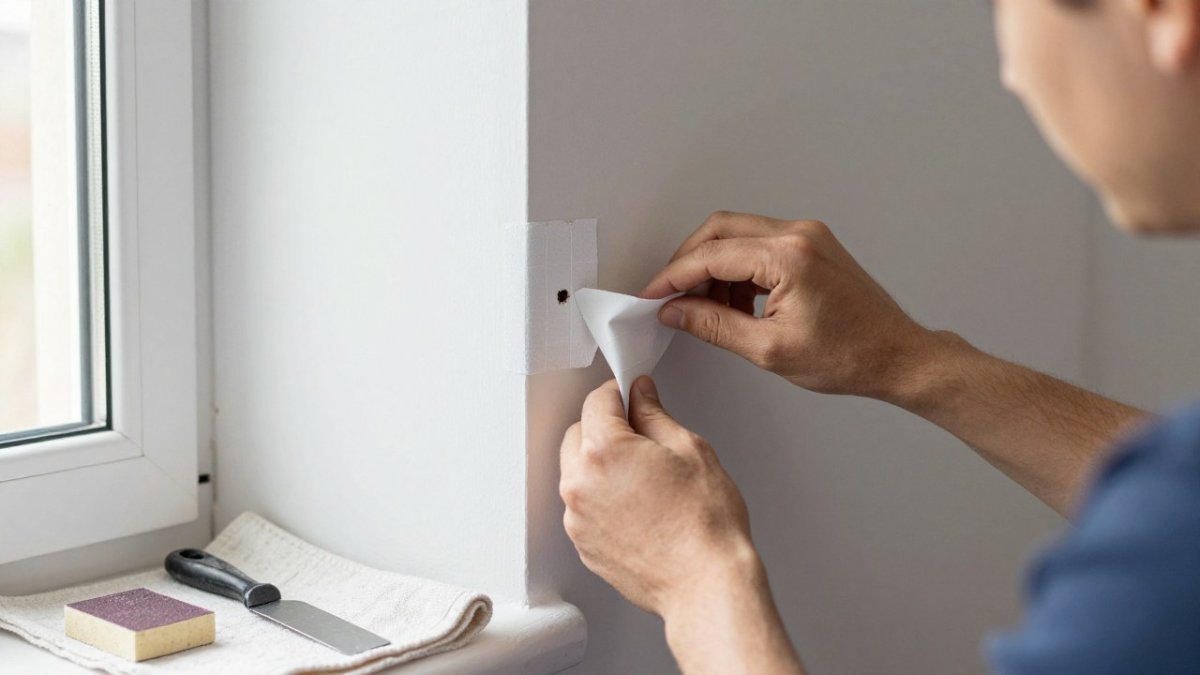
The right patch depends on hole size, damage type, and wall traffic, so the options differ in how they hold up.
| Option | Best for | Key difference |
|---|---|---|
| Pre-taped patch | Quick repairs | Fastest route to paint |
| Hot mud | Quick repairs | Fastest to paint |
| Paper tape with lightweight compound | Best finish | Smoothest final surface |
| Cut-in patch with backer | Lowest repeat-repair risk | Lasts longer on repeat damage |
| Panel overlay | Least dust, damp rooms | Moisture-resistant option |
Alternative to Mudding and Taping Drywall
Full mudding and taping is the slowest, dustiest part of a drywall repair, and it is where most do-it-yourself repairs go wrong. The alternatives below are not just faster products; they change how the repair behaves over time. Comparing them on finish quality, time, skill, mess, and repeat-repair risk is more useful than comparing them on price alone.
A practical comparison for a typical repair:
- Fastest to paint: pre-taped patch or hot mud.
- Best finish: paper tape with lightweight compound.
- Lowest repeat-repair risk: cut-in patch with backer, or panel overlay.
- Least dust: panel overlay or pre-taped patch.
- Best for damp rooms: panel overlay with a moisture-resistant product.
Watch out: mixing setting-type compound too thin or in too large a batch can cause it to set before it is applied, wasting material and forcing a redo.
Wall Panels to Cover Damaged Drywall
When a wall has extensive damage, overlaying it with panels can be a practical alternative to repair.
Several panel types are commonly used as drywall alternatives:
- PVC panels: Lightweight and water-resistant, these suit bathrooms, laundry rooms, and utility spaces.
- FRP panels (fiberglass-reinforced plastic): These resist moisture and impact well. Cleaning is simple, which makes them suitable for kitchens and commercial spaces.
- Polycarbonate panels: Strong and impact-resistant, these work in areas where durability matters more than appearance.
Panels typically require a flat, solid substrate. Check for loose sections and fix them first. Installation usually involves adhesive or fasteners and trim pieces at edges and corners.
Moisture-Resistant Options for Bathrooms and Wet Areas
Moisture can cause paper facing to separate and the gypsum core to soften, so moisture-resistant panel materials are often considered for bathrooms and other wet areas. Confirm product specifications and current pricing with the manufacturer or your installer before you decide.
When to Replace Damaged Drywall Instead
Repair is not always cheaper in the long run. Replace the drywall in these situations:
- The damage covers more than a few square feet.
- Water has soaked the board and it feels soft or crumbles.
- Mold is visible behind or on the surface.
- Repeated repairs have failed in the same spot.
- The wall has structural damage that needs to be exposed and fixed.
Booking a Free Estimate for Your Wall Repair
If you are not sure which approach fits your wall, an on-site assessment is the fastest way to decide. Always Pro Painters offers a free estimate for interior painting and wall finishing in Chicago and its suburbs. You can request a free estimate from Always Pro Painters for interior painting and wall repair work, or review our drywall and finishing services to see how a repair would be completed from patch to paint.
Frequently Asked Questions
What can I use to repair drywall without using a standard patch?
Small holes can be filled with self-adhesive mesh patches, spackling compounds, or pre-filled repair kits, which skip the multi-coat mudding and taping process. Larger holes usually need a backing board or a cut-in patch. Adhesive patches are most useful for holes under about two inches across. The right choice depends on hole size and whether the wall will be painted afterward, and drywall repair costs vary widely by method, so get a free estimate for a specific wall.
Is there an alternative to mudding and taping drywall?
Yes. Pre-filled patch kits, adhesive mesh patches, and surface-mounted wall panels can all cover damage without a full mud-and-tape finish. Panels work well when the damage is widespread and a full wall repair would be impractical. Mudding and taping still produces the smoothest result on sound drywall, so the best alternative depends on how much of the wall is damaged and how it will be finished.
Can wall panels cover damaged drywall?
Wall panels can cover damaged drywall, particularly in garages, utility rooms, and basements where appearance is secondary. Panels must be fastened to solid framing, so check that studs or furring strips are sound before installing. Panels add thickness to the wall, which can affect trim, outlets, and doors. Moisture-resistant panels are a better choice for bathrooms and other wet areas.
When should damaged drywall be replaced instead of repaired?
Replace drywall when damage covers a large area, when the board is crumbling or soft, when water damage has caused mold or persistent staining, or when there are repeated repairs in the same spot. Also replace it when the wall shows signs of structural issues. Spot repairs make sense for isolated dents and small holes in otherwise sound board. A professional inspection can confirm the scope before you commit to either path.