
 blog
Latex vs Oil-Based Paint: Key Differences Explained
Table of Contents
- What Latex and Oil-Based Paint Are
- How to Tell If Paint Is Oil or Latex
- Drying Time: Why Oil-Based Paint Drying Time Matters
- Durability, Finish, and Wear Resistance
- Application, Cleanup, and Odor Differences
- Can You Paint Latex Over Oil-Based Paint?
- Best Paint for Trim and Cabinets
- Choosing the Right Paint for Your Project
- Frequently Asked Questions
Last Updated: October 19, 2026
What Latex and Oil-Based Paint Are
Latex paint is water-based, so cleanup is simple: soap and water. Oil-based paint uses mineral spirits or paint thinner as its solvent. The key difference between latex oil-based paint types is what carries the pigment and binder to your surface.
Latex paint dries quickly because water evaporates fast. Oil-based paint dries slowly, sometimes taking 24 hours or more to harden, affecting your timeline and how many coats you can apply in a day.
Here's what makes each type distinct:
- Latex paint: Water-based, low odor, quick drying, easy cleanup
- Oil-based paint: Solvent-based, strong odor, slow drying, requires mineral spirits for cleanup
At Always Pro Painters, we work with both types depending on the surface and finish you need.
How to Tell If Paint Is Oil or Latex
The simplest test is the alcohol test. Dab a small amount of rubbing alcohol on a hidden area of the painted surface. If the paint softens or comes off on your cloth, it's latex. If it stays hard and doesn't transfer, it's likely oil-based.
This test has limits: old paint can be stubborn, primer may differ from the topcoat, and poor prep can make results inconclusive. If unsure, assume it's oil-based, the safer bet.
Other clues help too:
- Smell: Oil-based paint has a strong, lingering chemical odor. Latex smells milder or nearly odorless.
- Sheen: Oil-based paint typically has a smoother, more uniform gloss. Latex can look slightly flatter, especially in matte finishes.
- Age: Homes painted before 1990 are more likely to have oil-based paint on trim and cabinets.
Before repainting, scrape a small inconspicuous section. Oil-based paint usually peels in flakes; latex peels in larger sheets or doesn't peel as readily.
Drying Time: Why Oil-Based Paint Drying Time Matters
Drying time often decides which paint a homeowner actually finishes with, it affects coats per day, room downtime, and labor costs if you hire out.
Typical dry and recoat windows (70°F, 50% relative humidity):
- Latex paint: dry to touch in 1-2 hours; recoat in 4-6 hours; full cure in about 7-14 days.
- Oil-based paint: dry to touch in 6-8 hours; recoat in 16-24 hours; full cure in 24-48 hours or longer.
These are manufacturer-typical ranges, not guarantees. Cold, damp conditions stretch both timelines; warm, dry, ventilated conditions shorten them. Below about 50°F, oil-based curing can stall for days.
Why the gap matters in practice:
- Same-day coats: Latex lets you apply two coats in a single day on trim or walls. Oil-based usually forces a next-day return, which doubles trip charges if you are paying a painter.
- Room downtime: A bedroom painted with latex can be back in service the same evening. Oil-based paint typically keeps the room off-limits overnight and often longer because of lingering odor.
- Dust and debris: A slow-curing oil film stays tacky longer, so airborne dust settles into the finish.
- Weather windows: Exterior oil-based projects need a longer stretch of dry weather; one rain event during the 24-hour recoat window can ruin the coat.
Temperature and humidity rules of thumb:
- Most latex paints apply between 50°F and 85°F; some formulations allow application down to 35°F.
- Oil-based paints generally want 50°F-90°F and low humidity; high humidity slows solvent evaporation and can cause a wrinkled or sticky film.
- Good airflow speeds solvent release for oil-based paint but will not make it dry as fast as latex.
Durability, Finish, and Wear Resistance
Durability is where oil-based paint built its reputation, and where modern latex has closed most of the gap. The practical question is which holds up on your surface, at what cost, and for how long.
How each film behaves:
- Oil-based paint forms a harder, denser film with strong adhesion and moisture resistance. It levels beautifully, so brush marks flow out and gloss looks uniform. The trade-off is brittleness: on wood that expands and contracts, an aged oil film can crack and chip.
- Latex paint forms a more flexible film that moves with the substrate and resists cracking on wood and drywall. Modern 100% acrylic latex offers excellent scrub resistance and color retention. Lower-grade latex can show brush marks and may not level as smoothly as oil on high-gloss trim.
Surface-by-surface recommendations:
- Interior walls: Latex, clearly. It touches up easily, resists scrubbing in kitchens and hallways, and dries fast enough to keep rooms usable.
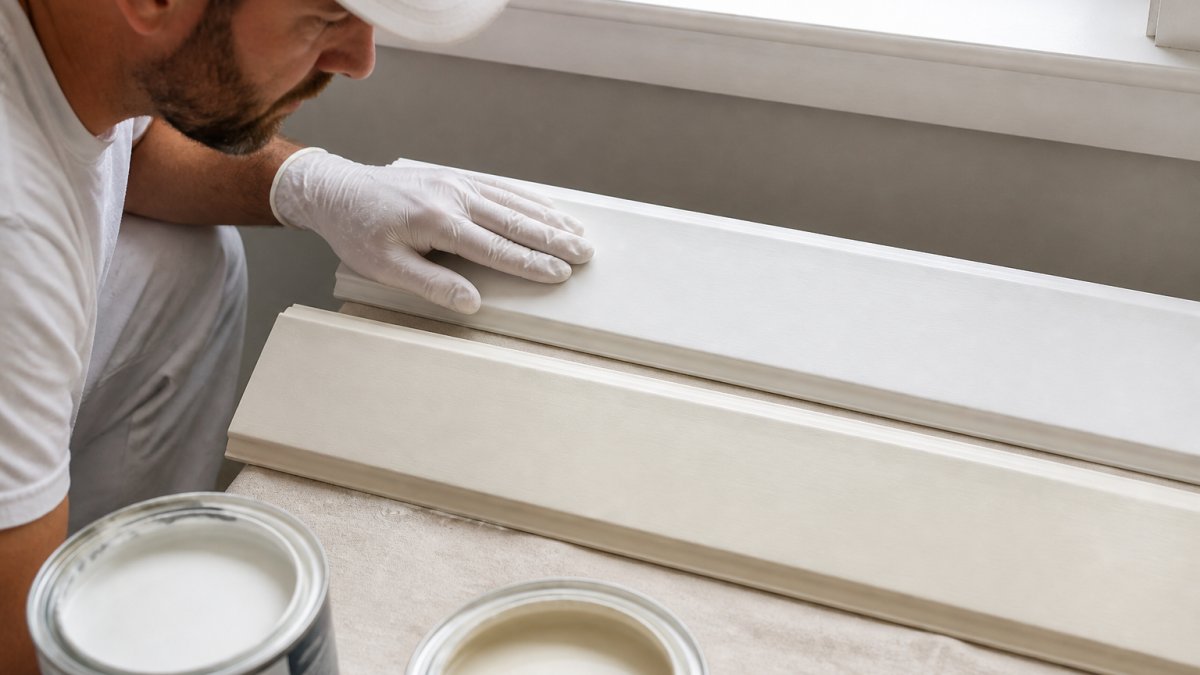
- Trim and doors: Both work. Oil-based gives the smoothest, hardest traditional finish; a high-quality acrylic latex with a bonding primer is now the common professional choice for speed and lower odor.
- Cabinets: Oil-based still has a slight edge in hardness for high-use kitchens, but cabinet-grade acrylic latex with proper prep performs comparably and avoids yellowing, a real drawback of oil on white cabinets in low-light areas.
- Bathrooms and kitchens: Oil-based resists moisture well, but quality latex in satin or semi-gloss with good ventilation performs well and is easier to maintain.
- Exterior surfaces: Latex is standard for siding because it flexes with temperature swings and resists cracking; oil-based works on metal and some trim but chalks and cracks under UV exposure.
- Floors and high-abuse surfaces: Neither is ideal; specialty floor coatings outperform both, but if choosing between them, oil-based offers more hardness.
Finish and sheen:
- Oil-based paint levels to a smooth, uniform gloss that hides application marks, useful on doors and trim where reflections show flaws.
- Latex can show brush or roller texture, especially in higher sheens; modern formulations level better than older ones, and a quality brush plus thin coats reduces the problem.
- Sheen choice matters more than paint type for cleanability: satin and semi-gloss clean up better than flat, regardless of chemistry.
Lifecycle cost trade-off:
Oil-based paint costs more per gallon, requires solvent cleanup, and its slower schedule adds labor hours. It may last longer on high-wear trim, but the repaint interval difference is often a few years, not decades. Latex is cheaper up front, faster to apply, and easier to touch up, so total cost of ownership often favors latex for walls and most trim, while oil-based can justify its premium on cabinets and doors.
Application, Cleanup, and Odor Differences
Applying latex paint is straightforward with standard brushes and rollers. Cleanup is fast, warm soapy water removes it completely, and tools can be rinsed and reused within minutes.
Oil-based paint requires mineral spirits or paint thinner for cleanup: soak brushes, wring them out multiple times, and dispose of the solvent properly. It takes longer and creates more waste.
The odor difference is dramatic. Oil-based paint produces a strong chemical smell that persists for days and many find overwhelming; latex smells mild or nearly odorless. If odor sensitivity is a concern, latex is clearly better.
Application technique differs slightly. Oil-based paint flows out and self-levels, hiding brush marks; latex requires more care, though modern formulations have improved significantly.
Here's the practical breakdown:
- Cleanup time: Latex wins. Five minutes versus thirty minutes or more.
- Odor: Latex wins decisively. Oil-based odor lingers for days.
- Brush care: Latex is simpler. Oil-based requires solvent soaking.
- Safety: Latex is safer. Oil-based fumes require serious ventilation.
Can You Paint Latex Over Oil-Based Paint?
You can paint latex over oil-based paint, but only if you prepare the surface correctly.
Oil-based paint creates a slick, glossy surface that latex won't adhere to well.
After sanding, clean thoroughly, dust and residue prevent adhesion.
Skip the sanding or primer, and your latex paint will eventually peel or flake. This is one of the most common painting mistakes homeowners make.
The reverse, painting oil-based over latex, is easier: oil-based paint adheres without extensive prep, though you should still sand lightly and clean the surface.
Here's the correct workflow for latex over oil-based:
- Sand the oil-based paint with 120-150 grit sandpaper
- Fill any gaps or damage with spackling compound
- Sand the filled areas smooth
- Clean the entire surface with a damp cloth
- Apply bonding primer
- Apply latex topcoat
This process takes time, but it prevents costly failures. Always Pro Painters treats this prep work as non-negotiable.
Best Paint for Trim and Cabinets
Trim and cabinets take more abuse than walls, touched, wiped down, exposed to moisture, so your paint choice affects durability and appearance for years.
Latex oil-based paint has been the traditional choice for trim and cabinets because it creates a harder, more durable finish that resists wear and levels beautifully, hiding brush marks, especially important for cabinets.
Modern latex paints have closed the gap: high-quality formulas designed for trim and cabinets now perform nearly as well as oil-based coatings, with faster drying and easier cleanup.
The trade-off depends on your priorities:
- Durability and finish: Oil-based still edges out latex slightly, especially for cabinets in high-use kitchens.
- Speed and convenience: Latex wins decisively. You finish faster and avoid solvent cleanup.
- Odor and safety: Latex is far better. Oil-based fumes are significant for interior work.
For trim in living spaces, latex works well and dries quickly. For cabinets in active kitchens, oil-based still offers a slight durability edge, but only with proper primer and technique.
Choosing the Right Paint for Your Project
The best paint for your project depends on three factors: the surface, your timeline, and your tolerance for odor and cleanup.
Choose latex if:
- You need the project done quickly
- You want easy cleanup
- Odor is a concern
- You're painting interior walls
- You prefer minimal ventilation requirements
- You're working in a space that needs to stay functional
Choose oil-based if:
- You're painting trim or cabinets that need maximum durability
- You want the smoothest possible finish
- You have time for extended drying
- Proper ventilation is available
- You're painting exterior surfaces in harsh climates
- You're repainting over existing oil-based paint without extensive prep
Most homeowners benefit from latex for interior walls and modern latex formulas for trim. Oil-based still has a place, but it's becoming less common as latex technology improves.
At Always Pro Painters, we recommend latex for most residential projects. It dries faster, cleans up easier, and poses fewer safety concerns.
The real secret isn't the paint type, it's the preparation. Poor prep ruins any paint; excellent prep makes even budget paint look good.
Choosing between latex and oil-based paint doesn't have to be complicated. Latex handles most residential projects efficiently and safely.
Frequently Asked Questions
Is 100% acrylic paint the same as latex paint?
Yes, acrylic latex paint and latex paint are the same product. The term 'latex' refers to water-based paint formulations, and acrylic is the primary binder in most modern latex paints. Both terms describe a water-based coating that cleans up with soap and water, unlike oil-based paint which requires mineral spirits or paint thinner for cleanup.
How can I tell if paint is latex or oil-based?
The most reliable method is the alcohol test: dampen a cloth with rubbing alcohol and rub it on the dried paint. If the paint comes off, it's latex (water-based). If it doesn't, it's oil-based. You can also check the original can label or look at cleanup requirements. Latex paint dries quickly and cleans up with soap and water, while oil-based paint requires mineral spirits or paint thinner.
Can you paint latex over oil-based paint?
Latex paint will not adhere well to oil-based paint without proper surface preparation. You must sand the existing oil-based paint to dull the finish and improve adhesion, then apply a bonding primer designed for this purpose. Skipping this step risks peeling and poor durability. If you're repainting over oil-based trim or cabinets, professional surface preparation is essential for a lasting finish.
Does oil-based paint last longer than latex paint?
The choice depends on your surface, climate, and maintenance expectations.