 blog
5 Ways to Improve Curb Appeal With Exterior Paint
Table of Contents
- 1. Refresh the Front Door With a Bold Exterior Paint Color
- 2. Repaint the Garage Door for a Clean, Well-Maintained Appearance
- 3. Paint Window Trim and Shutters to Highlight Architectural Features
- 4. How to Prepare a House Exterior for Painting Before You Open a Can
- 5. Choosing Exterior Paint Colors for Curb Appeal That Work Together
- Best Exterior Paint Finish for Doors, Trim, and Siding
- Cost to Paint a House Exterior and When to Call a Professional
- Conclusion: Start With One Project, Build From There
- Frequently Asked Questions
Last Updated: October 6, 2026
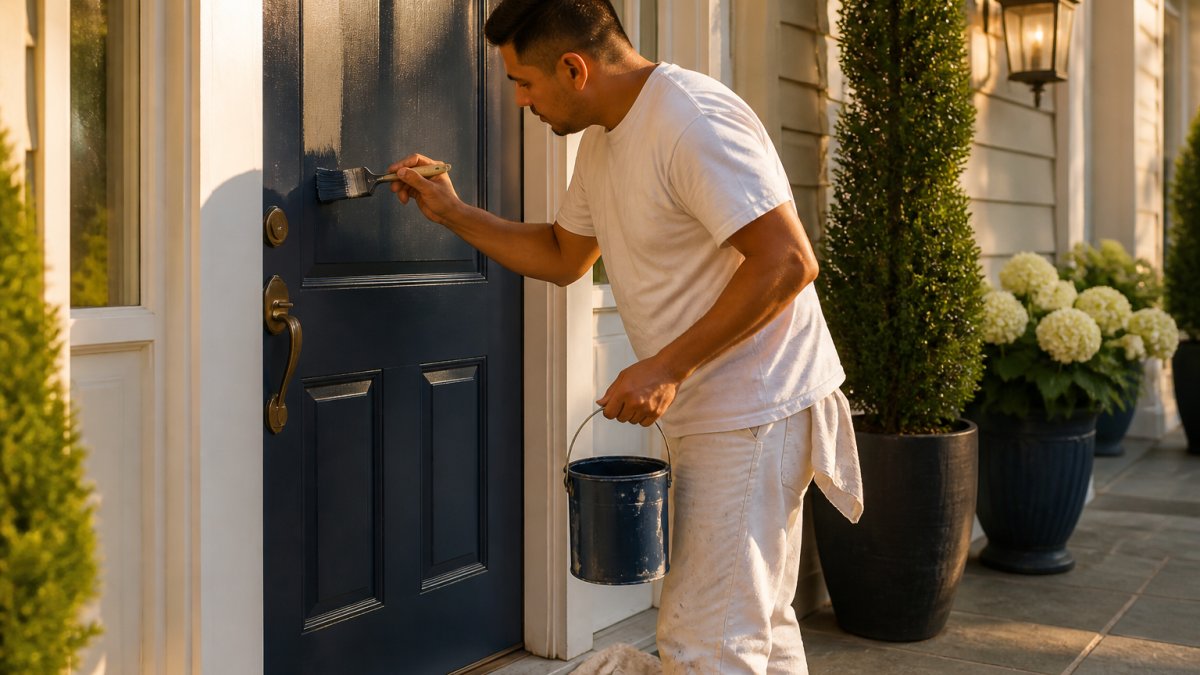
1. Refresh the Front Door With a Bold Exterior Paint Color
Curb appeal is the first impression your home makes, and few upgrades deliver it faster than a freshly painted front door. This guide breaks down 5 ways to improve curb appeal with exterior paint, starting with the single highest-impact spot on your house. A bold exterior paint color on the door draws the eye, adds personality, and signals a well-maintained home before anyone steps inside.
The front door is small enough to repaint in an afternoon, yet it changes how the whole facade reads. A deep navy, a warm red, or a rich charcoal all work. What matters is contrast: the door should stand apart from the siding, not blend into it.
A common mistake is picking a color that clashes with the roof or brick. Test a sample patch first and view it at different times of day. Light changes everything.
2. Repaint the Garage Door for a Clean, Well-Maintained Appearance
The garage door often covers a large share of your home's front wall, so a dull, faded finish drags down the entire exterior. A fresh coat of paint restores a clean appearance and makes the house look cared for.
Start with the substrate, not the color. Garage doors are usually one of four materials, and each one behaves differently under paint:
- Steel: Factory-finished steel often has a baked-on coating. Scuff it with 220-grit, wipe with a deglosser, and use a bonding primer before topcoat. Skip this and the new paint can chip off in sheets.
- Aluminum: Light, dent-prone, and prone to oxidation. Wash off the white chalky residue, then apply a self-etching or bonding primer.
- Wood: The most forgiving to paint but the most demanding to prep. Fill cracks, replace rot at the bottom rail, and prime bare spots with an exterior wood primer.
- Fiberglass or composite: Usually molded with a gel coat. Clean thoroughly, sand lightly, and use a primer rated for hard, non-porous surfaces.
Color strategy. Match the garage door to the siding for a calm, unified look, or go one shade darker for subtle depth. Avoid a color that fights the front door. Two bold colors on one facade split the eye and look busy. A useful rule: the garage door should read as part of the body of the house, not as a second front door.
Finish matters more here than almost anywhere else. A satin or low-sheen finish hides the panel seams and the inevitable road spray, while a high-gloss finish will spotlight every dent and wave in the door. Most exterior acrylics in a satin sheen hold up well and clean easily with a garden hose.
Prep sequence that prevents a one-season failure:
- Wash the door with a mild detergent and rinse thoroughly.
- Scrape and sand any peeling or chalking areas back to a sound edge.
- Feather the edges so the repair does not telegraph through the new coat.
- Prime bare metal, bare wood, and any patched spots.
- Paint the recessed panels first with a brush, then roll the flat sections for an even finish.
Check for peeling and chalking before you paint. A door that sheds old paint needs sanding and a primer first, or the new coat will fail within a season.
3. Paint Window Trim and Shutters to Highlight Architectural Features
Window trim and shutters frame your home's architectural features, and repainting them makes those details pop. This step is where a plain exterior gains definition.
Use a color that contrasts with the siding. White trim against a darker body, or a dark trim against light siding, sharpens every window. Shutters should match the trim or the door, not introduce a third color.
Scrape loose paint, fill any soft wood, and sand the edges smooth. Trim takes the most weather, so prep here decides how long the finish lasts.
4. How to Prepare a House Exterior for Painting Before You Open a Can
How to prepare a house exterior for painting is the step most homeowners rush, and it is the one that decides whether the job lasts. Good prep means a clean foundation for paint.
Follow these steps:
- Pressure wash the siding, trim, and porch to strip dirt and chalk
- Scrape and sand any peeling or flaking areas
- Fill cracks and gaps with exterior-grade caulk
- Replace rotted boards and repair damaged features
- Prime bare wood and patched spots
- Mask windows, hardware, and light fixtures
Skip the prep and the paint peels within a year. Do it well and the finish holds for many seasons.
U.S. EPA guidance on lead-safe renovation matters here: homes built before 1978 may have lead paint, and disturbing it without the right precautions is a health risk. Test before you scrape.
5. Choosing Exterior Paint Colors for Curb Appeal That Work Together
Exterior paint colors for curb appeal work best in a simple three-color plan: a main body, a trim, and one accent. That structure keeps the home exterior looking intentional instead of random.
Step 1: Read the fixed elements first. Roof, brick, stone, and any permanent masonry set the palette. You are not choosing colors in a vacuum; you are choosing colors that agree with what is already there.
- A warm roof (brown, tan, terracotta) pairs with warm siding tones: cream, taupe, warm gray, sage.
- A cool roof (charcoal, slate, black) pairs with cooler siding: cool gray, blue-gray, bright white.
- Red brick is a warm, saturated fixed element. It usually wants a quiet body color (cream, greige, soft white) and a trim that either matches the brick's undertone or contrasts cleanly against it.
Step 2: Choose the body color. This is the largest surface, so it should be the calmest. A common mistake is picking the body color you love in a paint chip without checking it against the roof.
Step 3: Choose the trim. Trim is the outline. It should either contrast with the body (white trim on a dark body, dark trim on a light body) or sit one step lighter or darker in the same family for a softer look.
Step 4: Choose one accent. The front door is the natural accent. This is where you add personality. A striking color on the door, with everything else calm, reads as designed rather than loud.
Palette examples that work in most neighborhoods:
- Warm traditional: cream body, soft white trim, deep red door.
- Cool modern: light gray body, white trim, navy or black door.
- Earthy: sage or olive body, cream trim, warm brown or terracotta door.
- High-contrast: charcoal body, bright white trim, natural wood or bold yellow door.
Common color mistakes to avoid:
- Adding a fourth color. The most common curb appeal mistake is adding a fourth, which makes even a well-painted home look cluttered.
- Ignoring the neighborhood. A color that reads as tasteful in one block can read as out of place in another. Drive the street and note the range of body colors before you pick.
- Trusting the paint chip. A 2-inch chip looks different from a whole wall. Paint a sample board, view it at morning, midday, and evening, and check it against the roof and the driveway.
- Choosing the door color last. Pick the accent early so the body and trim can be chosen to support it, not compete with it.
Best Exterior Paint Finish for Doors, Trim, and Siding
The best exterior paint finish depends on the surface. Sheen affects both durability and how the home looks.
| Surface | Best Finish | Why |
|---|---|---|
| Siding | Satin or flat | Hides flaws, resists dirt |
| Front door | Semi-gloss | Tough, easy to wipe clean |
| Trim and shutters | Semi-gloss | Stands up to weather, sharp lines |
| Garage door | Satin | Balanced sheen, easy to wash |
Higher sheen means more durability and easier cleaning, but it also shows every dent and flaw. Flat finishes hide imperfections but collect dirt. For most homes, satin on the body and semi-gloss on the trim is the safe, proven pairing.
Product choice matters as much as sheen. Look for 100% acrylic exterior paint, which holds color and flexes with temperature swings better than cheaper blends.
Paint quality and performance guidance from the Paint Quality Institute explains why acrylic resins outperform older oil-based formulas outdoors.
Cost to Paint a House Exterior and When to Call a Professional
The cost to paint a house exterior varies widely based on size, height, prep work, and how many stories you have. Pricing depends on the scope of your project, so we recommend a written estimate rather than a guess.
DIY makes sense for a single door, trim, or a one-story garage door. It stops making sense when ladders, height, or heavy prep are involved.
Call a professional when:
- Your home is two or more stories
- Siding has rot, peeling, or failing caulk
- You need pressure washing and repairs before paint
- The weather window is tight and you need it done right
At Always Pro Painters, our process starts with detailed surface preparation and ends with a final walkthrough, so the finish holds and the lines stay clean. We build around the finish, not the rush.
Conclusion: Start With One Project, Build From There
Improving curb appeal with exterior paint does not require painting the whole house at once. Start with the front door, then the garage door, then the trim. Each step builds on the last.
If you want the job done right the first time, with clean lines and a solid finish, Always Pro Painters can help. We bring a clean foundation for paint, careful surface preparation, and a final walkthrough to confirm every detail meets your expectations.
Get started with Always Pro Painters and request your free estimate today.
Frequently Asked Questions
What exterior paint colors improve curb appeal the most?
Colors that contrast with the siding tend to have the strongest effect. A dark charcoal, deep navy, or rich red on the front door against a light neutral body stands out from the street without clashing. For siding, warm whites, greige, and soft sage green stay current and photograph well for listings. Test samples on the actual surface in daylight before committing, since sun exposure changes how a color reads.
How should I prepare exterior surfaces before painting?
Start by pressure washing to remove dirt, chalk, and mildew, then let the surface dry completely. Scrape loose paint, sand rough edges, and fill cracks or gaps with exterior-grade caulk. Spot-prime bare wood and any repaired areas. Preparation is what determines how long the new coat lasts, so a painter who skips sanding and patching is shortening the life of the job.
How often should a house exterior be repainted?
Most exteriors need a fresh coat every 7 to 10 years, though that depends on the material and climate. Wood siding usually needs repainting sooner than fiber cement or vinyl. Homes exposed to harsh freeze-thaw cycles and heavy summer sun age faster. Watch for fading, chalking, peeling, and caulk failure as signals that it is time, rather than waiting for a fixed calendar date.
What does it cost to paint a house exterior?
Pricing depends on square footage, siding material, the amount of prep work, number of stories, and whether repairs are needed. A single front door costs far less than a full exterior repaint. Always Pro Painters provides free estimates based on your specific property, so you get a real number rather than a generic range. Request a quote before you budget the project.