
 listicle
Best Interior Painting Contractors Chicago: 2026 Guide
Table of Contents
- Top Interior Painting Contractors in Chicago
- Why Hire Professional Interior Painting Contractors
- Average Cost of Interior Painting in Chicago
- How to Prepare Walls for Interior Painting
- Eco-Friendly and Low-VOC Paint Options
- Questions to Ask Painting Contractors Before Hiring
- Conclusion
Last Updated: August 23, 2026
Top Interior Painting Contractors in Chicago
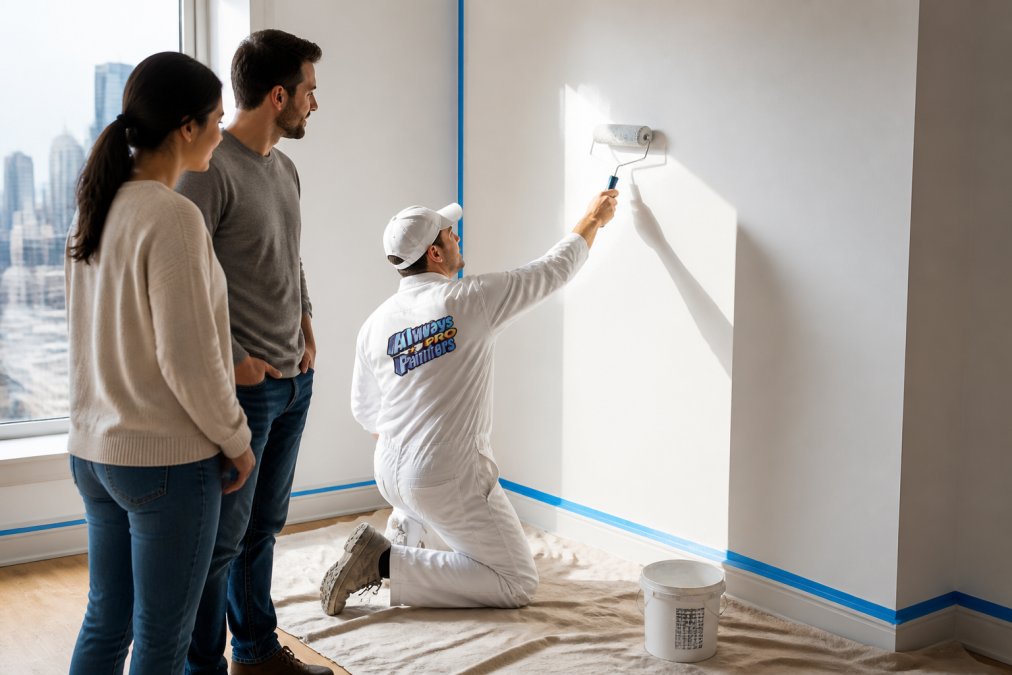
Finding reliable interior painting contractors is harder than it looks. The contractors below stand apart because they treat surface preparation, clean lines, and client communication as non-negotiable. This guide from Always Pro Painters breaks down options available right now.
Quick Picks:
- Best Overall: Always Pro Painters, meticulous prep, final walkthrough, residential and commercial
- Best for High-End Finishes: Hester Painting & Decorating, specialty finishes, union professionals, 55+ years of experience
- Best for Versatile Remodeling: Artisons Painting and Remodeling, family-owned, A+ BBB rating, comprehensive repair capabilities
- Best for Commercial Projects: Painters Inc., 20+ years in commercial painting, flexible scheduling
- Best All-in-One Contractor: CHJ Painting & Remodeling Inc., painting, drywall, and carpentry under one roof
| Contractor | Best For | Services | Free Estimate |
|---|---|---|---|
| Always Pro Painters | Residential and commercial, detail-first | Interior, exterior, drywall, cabinet refinishing | Yes |
| Hester Painting & Decorating | High-end finishes, union labor | Interior, exterior, wall coverings, specialty | Yes |
| Artisons Painting and Remodeling | Family-owned, repair-heavy projects | Interior, exterior, drywall, plaster, staining | Yes |
| CHJ Painting & Remodeling Inc. | Multi-trade remodeling | Painting, drywall, carpentry, general contracting | Yes |
| Painters Inc. | Commercial properties | Commercial interior and exterior, specialty coatings | Yes |
1. Always Pro Painters, Best Overall for Detail-Oriented Results
Always Pro Painters is a top pick for homeowners and business owners who've been burned by shortcuts before. The core philosophy is straightforward: the finish is only as good as the preparation that precedes it. That means drywall repairs, thorough surface preparation, and clean primer application before finish coats go on the wall.
What separates Always Pro Painters is the final walkthrough. Every completed project ends with a client review, ensuring trim, molding, and wall surfaces meet expectations before the crew packs up. Services include residential interior and exterior painting, cabinet refinishing, and drywall repair.
What works: Detailed surface preparation, clean lines, no-shortcut approach, cabinet refinishing capability, final walkthrough for client satisfaction.
One honest limitation: The public review volume is still growing.
2. Hester Painting & Decorating, Best for Specialty and High-End Finishes
Operating since 1968, Hester Painting & Decorating brings more than five decades of experience to residential and commercial projects (bbb.org). The firm is a union painting contractor, meaning their team undergoes ongoing professional training and adheres to established safety standards.
Where Hester stands out is specialty work: faux finishes, wall coverings, and decorative treatments that go beyond standard paint application. For luxury condo renovations or high-end commercial spaces where interior design aesthetics are central, Hester's depth of craft is hard to match.
What works: Extensive experience, union-trained professionals, specialty finishes and wall coverings, new construction capability.
One honest limitation: Union labor structure likely places Hester at a higher price point than general painting contractors.
3. Artisons Painting and Remodeling, Best for Family-Owned Reliability
Artisons is a third-generation painting operation with an A+ Better Business Bureau rating and five-star reviews across multiple platforms. The family-owned structure means direct accountability, the person who gives the quote is connected to the crew doing the work.
The company covers residential and commercial interior and exterior painting, drywall and plaster repair, spray finishes, staining, and rotten siding and wood replacement. Every job includes a dedicated foreman on site, which keeps quality consistent across longer projects.
What works: Generational experience, strong reputation, dedicated foreman on every job, comprehensive repair capabilities alongside painting.
One honest limitation: The website leans residential, so commercial clients should confirm scope and capacity directly before committing to a larger project.
4. CHJ Painting & Remodeling Inc., Best for Multi-Trade Projects
CHJ Painting & Remodeling takes a broader approach than most dedicated painting firms. Beyond interior and exterior painting, they offer drywall repair and installation, carpentry services, and general contracting work, making them practical for homeowners who need more than paint.
The company provides free cost estimates and emphasizes options that fit both budget and timeline. For larger renovations where painting is one piece of a bigger project, having a single contractor manage multiple trades reduces coordination headaches significantly.
What works: Multi-trade capability, free estimates, budget-conscious approach, versatility for remodeling projects.
One honest limitation: Because CHJ operates across multiple trades, they're less specialized in painting technique than firms focused exclusively on paint application.
5. Painters Inc., Best for Commercial Properties
Painters Inc. has spent more than 20 years focused on commercial painting in the Chicago area (bbb.org). Their work spans office buildings, retail spaces, industrial facilities, and warehouses, where paint durability, specialty coatings, and minimal operational disruption are priorities.
The company offers flexible scheduling designed to work around business operating hours and provides free consultations and detailed project plans.
What works: Two decades of commercial experience, flexible scheduling, high-performance coatings suited for high-traffic spaces, free consultations.
One honest limitation: Painters Inc. is primarily commercial-focused. Residential homeowners would be better served by a contractor whose core business is residential work.
Why Hire Professional Interior Painting Contractors
Professional interior painting contractors deliver results that go beyond color on walls. Sharp edges at trim and molding, surfaces that hold paint evenly because they were properly prepared, and finishes that last years rather than peeling within months are the hallmarks of quality work.
Surface preparation is where most amateur jobs fail. Skipping sanding, patching, caulking, and sealing before primer application means the finish coat is applied over imperfections that will telegraph through the paint within months. Professional painters understand that the wall's condition before the first brush stroke determines the final result. They also guide clients through low-VOC options, finish types appropriate for specific rooms, and color matching that accounts for how light interacts with wall surfaces throughout the day.
Average Cost of Interior Painting in Chicago
Interior painting costs vary based on several factors, and any contractor who quotes a flat rate without seeing the space should raise a flag. Pricing is always project-specific.
What Drives the Final Price
The primary cost variables include:
- Square footage: Pricing is typically calculated on a per-square-foot or per-room basis, though rates vary by contractor and project complexity.
- Surface condition: Walls with significant damage, old wallpaper, or multiple paint layers require more preparation time. Drywall repair, patching, and skim coating add to costs but are necessary for quality finishes.
- Ceiling height: Standard 8-foot ceilings are straightforward. Vaulted ceilings, stairwells, and two-story spaces require additional equipment and labor.
- Number of coats: Most professional jobs require a primer coat plus two finish coats for full coverage and durability.
- Trim and molding: Painting trim, baseboards, crown molding, and door frames is detail work that takes disproportionately more time per linear foot than open wall surfaces.
- Cabinet refinishing: Cabinet painting involves degreasing, sanding, priming, and finish application, priced separately from standard wall painting.
Always Pro Painters offers free estimates, which is the right starting point for any project. A detailed estimate should break down labor, materials, and preparation work separately.
How to Prepare Walls for Interior Painting
Proper wall preparation is the single most important factor in achieving a lasting, professional-quality finish. Most painting failures trace back to inadequate prep, not the paint itself.
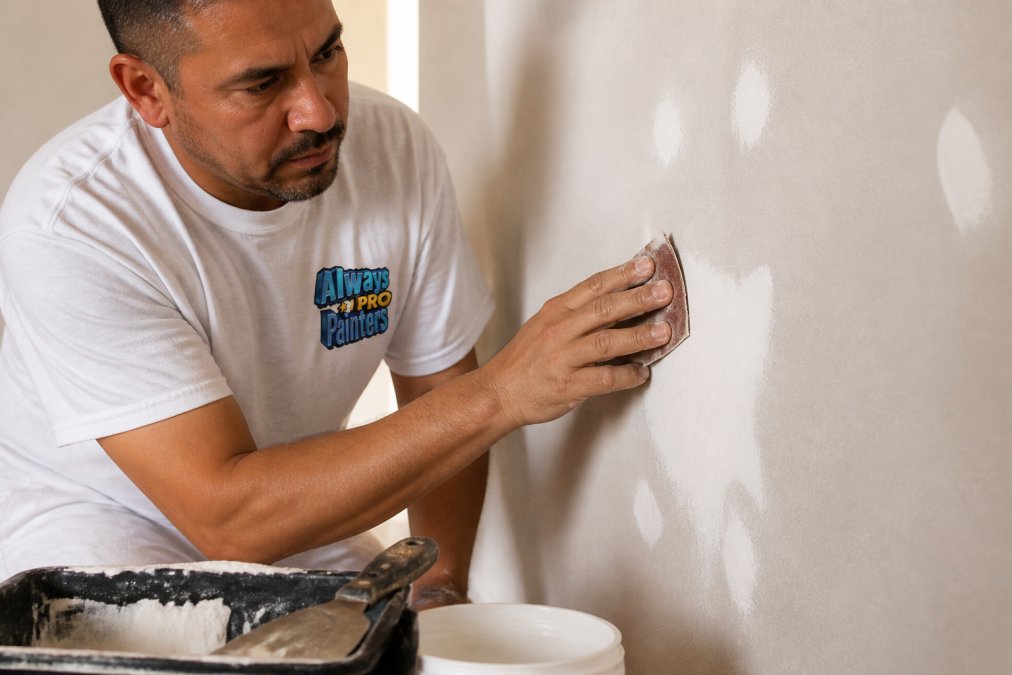
Here is a pre-painting preparation checklist that professional interior painting contractors follow on every job:
- Clear and protect the space. Move furniture away from walls and cover remaining pieces with drop cloths. Remove switch plates, outlet covers, and hardware.
- Clean all surfaces. Wash walls with a mild detergent solution to remove grease, dust, and residue. Allow surfaces to dry completely.
- Inspect for damage. Identify cracks, nail holes, dents, water stains, and peeling paint. Mark everything that needs repair.
- Make all repairs. Fill nail holes and small cracks with lightweight spackle. Larger voids require joint compound and may need multiple applications.
- Sand all repaired areas. Once repairs are dry, sand smooth with medium-grit sandpaper, then finish with fine-grit. Feather edges so repairs blend into surrounding surfaces.
- Caulk gaps and seams. Apply paintable caulk along trim, baseboards, crown molding, and window frames. Smooth with a damp finger and allow to cure per manufacturer instructions.
- Apply primer. Prime all repaired areas at minimum. For new drywall, dramatic color changes, or stained surfaces, prime the entire wall.
- Tape off trim and adjacent surfaces. Apply painter's tape along trim, ceilings, and any surfaces receiving a different color. Press tape edges firmly to prevent bleed-through.
- Apply finish coats. Two coats are standard for full, even coverage. Allow adequate dry time between coats per paint manufacturer specifications.
- Final inspection. Review all surfaces in multiple light conditions before removing tape and drop cloths. Address any touch-ups before paint fully cures.
This process takes longer than skipping straight to the finish coat. That's the point. A clean foundation for paint is what separates a professional result from one that just looks painted.
Eco-Friendly and Low-VOC Paint Options
Low-VOC paint is now the practical standard for interior painting in occupied residential and commercial spaces (the EPA). VOCs (volatile organic compounds) are chemical compounds that off-gas from conventional paints during and after application, contributing to poor indoor air quality and lingering paint smell.
Modern low-VOC and zero-VOC formulations have closed the performance gap with conventional paints significantly. For clients with children, pets, or occupants with respiratory sensitivities, specifying low-VOC paint is straightforward. For commercial spaces that need to remain operational during painting, low-VOC products reduce air quality impact and allow faster return to normal use.
Key considerations when selecting eco-friendly paint options:
- VOC content labeling: Look for products labeled "low-VOC" (under 50 grams per liter) or "zero-VOC" (under 5 grams per liter).
- Finish type and application: Low-VOC products are available across all standard finish types: flat, eggshell, satin, semi-gloss.
- Primer compatibility: Low-VOC finish coats should be paired with low-VOC primers for a consistent, low-emission project.
Requesting low-VOC options is straightforward, any reputable interior painting contractor should accommodate the specification without treating it as unusual.
Questions to Ask Painting Contractors Before Hiring
Vetting interior painting contractors before signing a contract prevents the most common problems: poor preparation, rushed timelines, unexpected costs, and crews that disappear when issues arise.
1. What does your surface preparation process include? A contractor who can describe their prep steps specifically, cleaning, patching, sanding, caulking, priming, is one who actually performs them. Vague answers are a warning sign.
2. Are you licensed and insured? Verify both. A licensed and insured contractor protects you from liability if a worker is injured on your property and gives you recourse if work doesn't meet contracted standards.
3. What paint brands and products do you use? Professional contractors use professional-grade products. If a contractor is vague about materials or proposes using whatever is cheapest, that choice will show in the finish.
4. How do you handle color changes or touch-ups after the job is complete? Understand the contractor's policy before work begins. Some contractors include a touch-up period; others charge for return visits.
5. What does the project timeline look like, and what could extend it? Realistic timelines account for dry times between coats and the actual scope of surface preparation. A contractor who promises unusually fast turnaround may be planning to skip steps.
6. How do you protect furniture, floors, and adjacent surfaces? Drop cloths, plastic sheeting, and painter's tape are standard. Ask specifically how they handle dust from sanding and whether they clean up daily or at project completion.
7. Do you offer a final walkthrough? A final walkthrough is the contractor's opportunity to demonstrate that work meets the agreed standard, and your opportunity to flag anything that needs attention before the crew leaves.
Most homeowners and property managers don't struggle to find painters; they struggle to find painters who treat preparation as seriously as the finish coat. Always Pro Painters was built around exactly that problem: a process that starts with a clean foundation, covers every surface with the detail it requires, and ends with a final walkthrough so nothing gets left to chance. Request a free estimate from Always Pro Painters and get a project plan built around the finish, not the rush.
=== FAQ ANSWERS (audit these too, same rules) ===
[1] Q: How much does it cost to paint the interior of a house in Chicago? A: Interior painting costs vary based on square footage, ceiling height, surface condition, and the number of rooms. Factors like drywall repair, primer application, and the number of finish coats also affect the final price. Because every project is different, most reputable interior painting contractors in Chicago offer free estimates. Request a detailed quote that itemizes prep work, materials, and labor so you can compare accurately.
[2] Q: Are painting contractors in Chicago required to be licensed and insured? A: Illinois does not issue a statewide painting contractor license, but the City of Chicago requires contractors to hold a valid business license. More importantly, any contractor you hire should carry general liability insurance and workers' compensation coverage. Always ask for proof of both before work begins. A licensed and insured contractor protects you from liability if a worker is injured on your property or accidental damage occurs during the project.
[3] Q: Do interior painters in Chicago provide free estimates? A: Most professional interior painting contractors offer free project estimates, either on-site or virtually. A thorough estimate should cover surface preparation, primer application, the number of finish coats, trim and molding painting, and any drywall repair needed. Be cautious of estimates that arrive without an in-person or detailed virtual assessment, a number given without seeing the space rarely reflects the true scope of the work.
[4] Q: How long does a professional interior paint job take? A: A standard single-room interior painting project typically takes one to two days when surface preparation, primer, and finish coats are all included. A full home interior refresh can take anywhere from three days to two weeks depending on square footage, the extent of drywall repairs, and the number of colors or accent walls involved. Ask your contractor for a realistic painting project timeline before work starts so you can plan accordingly.
[5] Q: What is the difference between a handyman and a professional painting contractor? A: A handyman handles light general tasks but typically lacks the specialized training, equipment, and insurance that professional painting contractors carry. Professional painters bring expertise in surface preparation, color matching, primer application, and paint application techniques that produce a flawless finish. For anything beyond a single small room, a dedicated painting contractor delivers better paint durability, cleaner lines, and a result that holds up over time.
Frequently Asked Questions
How much does it cost to paint the interior of a house in Chicago?
Interior painting costs vary based on square footage, ceiling height, surface condition, and the number of rooms. Factors like drywall repair, primer application, and the number of finish coats also affect the final price. Because every project is different, most reputable interior painting contractors in Chicago offer free estimates. Request a detailed quote that itemizes prep work, materials, and labor so you can compare accurately.
Are painting contractors in Chicago required to be licensed and insured?
Illinois does not issue a statewide painting contractor license, but the City of Chicago requires contractors to hold a valid business license. More importantly, any contractor you hire should carry general liability insurance and workers' compensation coverage. Always ask for proof of both before work begins. A licensed and insured contractor protects you from liability if a worker is injured on your property or accidental damage occurs during the project.
Do interior painters in Chicago provide free estimates?
Most professional interior painting contractors offer free project estimates, either on-site or virtually. A thorough estimate should cover surface preparation, primer application, the number of finish coats, trim and molding painting, and any drywall repair needed. Be cautious of estimates that arrive without an in-person or detailed virtual assessment, a number given without seeing the space rarely reflects the true scope of the work.
How long does a professional interior paint job take?
A standard single-room interior painting project typically takes one to two days when surface preparation, primer, and finish coats are all included. A full home interior refresh can take anywhere from three days to two weeks depending on square footage, the extent of drywall repairs, and the number of colors or accent walls involved. Ask your contractor for a realistic painting project timeline before work starts so you can plan accordingly.
What is the difference between a handyman and a professional painting contractor?
A handyman handles light general tasks but typically lacks the specialized training, equipment, and insurance that professional painting contractors carry. Professional painters bring expertise in surface preparation, color matching, primer application, and paint application techniques that produce a flawless finish. For anything beyond a single small room, a dedicated painting contractor delivers better paint durability, cleaner lines, and a result that holds up over time.
This article was written using GrandRanker