
 ultimate-guide
Exterior Painting Companies Near Me: How to Choose
Table of Contents
- How to Find Exterior Painting Companies Near Me
- Average Cost to Paint House Exterior
- Exterior House Painting Preparation Steps
- Best Time of Year to Paint Exterior
- Services Offered by Local Exterior Painting Companies
- Requesting a Free Estimate and Project Quotes
- Frequently Asked Questions
Last Updated: October 2, 2026
How to Find Exterior Painting Companies Near Me
Searching for exterior painting companies near me usually starts the same way: a homeowner notices peeling paint or faded siding and wants a crew they can trust.
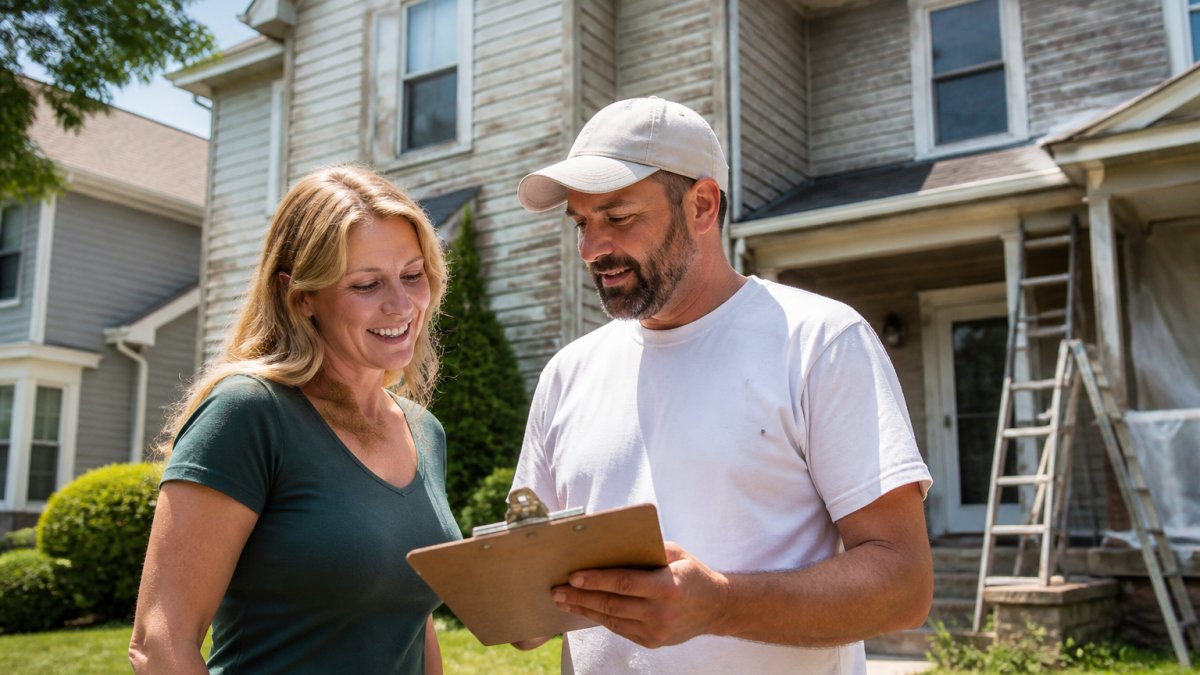
The biggest mistake we see is homeowners collecting three quotes and picking the middle number.
Licensing and Insurance Verification
Ask for the license number and certificate of insurance before anyone climbs a ladder. A legitimate painting contractor carries a business license and either general liability coverage or a workers' compensation policy, and a reputable company will hand over proof without hesitation. Verify the license through your state or local licensing authority, and call the listed carrier to confirm the policy is active.
Customer Reviews and Ratings
Customer reviews tell you how a company behaves when something goes wrong, which is the part of the job that matters most. Read the three-star reviews before the five-star ones: the useful signal is how the company responded to a complaint, a missed deadline, or a callback request. Look for specifics, whether the crew showed up when promised, whether the job site was left clean, whether the final walkthrough caught problems.
Average Cost to Paint House Exterior
The average cost to paint a house exterior depends on square footage, siding material, number of stories, prep condition, and regional labor rates, so no single figure applies to every home.
Always Pro Painters does not publish flat rates because pricing depends on the scope of your specific project. The honest answer is that a firm quote requires an on-site assessment.
What Drives the Price Up or Down
Five variables explain most of the spread between two bids on the same house:
- Paintable square footage. Measured wall area, not the home's listed square footage. A 2,000-square-foot house can have 1,800 or 3,200 square feet of paintable surface depending on stories and footprint.
- Siding material. Smooth hardboard and vinyl are fast to coat. Stucco, brick, and rough-sawn cedar drink paint and require more product and time.
- Prep condition. Chalky, peeling, or mildewed surfaces need washing, scraping, sanding, and priming. A sound surface may need only a wash and spot-prime.
- Height and access. Two and three stories, steep roof pitches, and tight side yards require ladders, staging, or lifts, all of which add labor hours.
- Coating choice. A standard 100 percent acrylic latex is the workhorse. Elastomeric coatings bridge hairline cracks on masonry and stucco but cost more per gallon. Oil-based and alkyd products still have a place on certain bare woods and metals but are increasingly restricted by VOC rules.
Paint Type and Durability: What Actually Lasts
Coating selection is the most under-discussed line item in most exterior bids, and it is where a cheap quote quietly saves money. The three families you will see quoted most often:
| Coating | Best For | Typical Recoat Window | Trade-offs |
|---|---|---|---|
| 100% acrylic latex | Wood, fiber cement, vinyl, most trim | 7-10 years | Flexible, breathable, easy to touch up; needs a sound substrate |
| Elastomeric | Stucco, masonry, brick | 10-15 years | Bridges hairline cracks; thick film, limited color flexibility, not for wood |
| Oil/alkyd | Bare wood, ferrous metal, some primers | 5-8 years | Hard finish, strong adhesion; slower dry, higher VOC, yellowing on interior use |
Two practical rules follow. First, ask what specific product the contractor intends to use, by brand and line, not just "premium paint." Second, ask how many coats. One coat over a color change or bare patches is a shortcut, not a finish; two coats over properly primed surfaces is the industry baseline for a durable exterior.
DIY vs. Professional Cost-Benefit Analysis
DIY exterior painting saves on labor but costs you time, equipment, and risk. On a single-story ranch with simple siding, a careful homeowner can do solid work over a few weekends. On a two-story home with dormers, rotten trim, and lead paint concerns, the math flips fast. Professional painters bring ladders, sprayers, masking equipment, and the experience to spot failing caulk and soft wood before they paint over it.
| Factor | DIY | Professional Crew |
|---|---|---|
| Upfront cost | Materials only | Labor plus materials |
| Time to complete | Multiple weekends | Days, weather permitting |
| Surface preparation | Limited by tools and skill | Full scraping, caulking, priming |
| Insurance coverage | None | Liability and workers' comp |
| Warranty on work | None | Workmanship warranty typical |
| Best for | Simple, single-story homes | Multi-story, older, or damaged exteriors |
Exterior House Painting Preparation Steps
Exterior house painting preparation steps determine how long the finish lasts, and skipping them is the most common reason exterior paint fails early. A thorough prep process includes washing the surface, scraping loose paint, sanding rough edges, repairing wood, caulking gaps, and priming bare spots before any topcoat goes on. Pressure washing removes dirt, chalk, and mildew that would keep paint from bonding; scraping and sanding create a smooth surface so the new coating adheres evenly; caulking seals joints around trim, windows, and doors where water intrudes; and priming bare wood and patched areas locks in the surface and blocks stains.
Step-by-Step Preparation Checklist
- Pressure wash all siding, trim, and eaves; let surfaces dry fully
- Scrape loose and peeling paint down to bare, sound substrate
- Sand rough edges and feather transitions between painted and bare areas
- Repair rotted wood, replace damaged trim boards, and fill cracks
- Caulk gaps around windows, doors, and trim joints with exterior-grade sealant
- Prime all bare wood, patched areas, and previously unpainted surfaces
- Mask windows, fixtures, and landscaping; cover walkways and plants
- Confirm weather forecast holds for the full application and cure window
Best Time of Year to Paint Exterior
The best time of year to paint a house exterior is when temperatures stay consistently between roughly 50 and 85 degrees Fahrenheit with low humidity and no rain in the forecast, for most of the country, late spring through early fall. Paint needs time to cure, and extreme heat, cold, and humidity all disrupt that process: midday sun can dry the coating too fast to bond, cold prevents proper curing, and humidity traps moisture under the film.
Services Offered by Local Exterior Painting Companies
Services offered by local exterior painting companies go well beyond rolling on a topcoat, and the scope of what a crew handles tells you a lot about their capability. A full-service exterior contractor typically covers surface preparation, caulking, scraping, priming, and trim painting alongside the main siding work, and many also offer pressure washing, deck staining, wood repair, siding restoration, and specialty coatings.
What Each Service Actually Includes
- Pressure washing and soft washing. Removes dirt, chalk, mildew, and loose paint. Soft washing uses lower pressure and a cleaning solution for siding that cannot take a hard spray, such as older wood or certain fiber cement.
- Scraping, sanding, and feathering. Loose and peeling paint is removed down to sound substrate, then edges are feathered so the new coat does not telegraph ridges. This is the step most often cut on low bids.
- Wood repair and replacement. Rotted trim, fascia, and sill boards are cut out and replaced, not filled and painted over.
- Caulking and sealing. Exterior-grade sealant is applied at joints around windows, doors, corner boards, and trim where water intrudes. Caulk is a wear item and should be refreshed every repaint cycle.
- Priming. Bare wood, patched areas, and previously unpainted surfaces get a primer coat. Some coatings are self-priming over sound existing paint; bare substrate is a different story.
- Field painting and trim painting. Field siding is typically sprayed or rolled; trim, doors, and shutters are usually brushed or sprayed with a finer tip for a crisp line.
- Deck and fence staining. Often bundled with an exterior repaint because the prep and weather windows overlap. Stain is not paint; ask which product line is quoted.
- Specialty coatings. Elastomeric for masonry, mildew-resistant formulas for shaded north walls, and stain-blocking primers for cedar and redwood are common add-ons.
Bundled vs. Add-On: How to Read the Bid
Most exterior bids fall into one of three shapes, and the shape tells you what you are buying:
| Bid Shape | What It Usually Means |
|---|---|
| One lump sum, no line items | Hard to compare; ask for a breakdown before signing |
| Labor / materials / prep split | Comparable across contractors; the standard you want |
| Itemized by service | Most transparent; easiest to add or remove scope |
If pressure washing, caulking, or priming does not appear in the written scope, assume it is not included and ask directly.
Requesting a Free Estimate and Project Quotes
Requesting a free estimate should take about an hour and yield a written scope you can compare against other bids.
| Question to Ask | Why It Matters |
|---|---|
| Is prep included or an add-on? | Reveals the real scope of the bid |
| What's the payment schedule? | Protects you from paying in full upfront |
| Is there a workmanship warranty? | Covers defects after the crew leaves |
| How will you handle my color change? | Clarifies repaint and touch-up terms |
| Can you work around my schedule? | Matters for occupied homes and businesses |
Finding an exterior painting contractor you can trust takes more than a quick search, and the difference between a finish that lasts and one that fails comes down to preparation and follow-through. Always Pro Painters delivers a comprehensive property refresh built around the finish, not the rush, with detailed surface preparation, clean lines, and a solid finish without shortcuts.
Frequently Asked Questions
How much should it cost to paint a 2000 square foot house exterior?
Costs vary widely by region, siding material, prep needs, and paint quality. For a 2,000 square foot home, an accurate estimate requires an inspection of the property. Factors include surface preparation, caulking, priming, and number of stories. Always Pro Painters offers a free estimate to give you an accurate number for your specific home.
What time of year is best to paint outside?
The best time of year to paint exterior surfaces is when temperatures stay between 50°F and 85°F with low humidity and no rain forecast for at least 24 hours. In many regions, late spring through early fall works well. Painting in extreme heat or cold can prevent proper curing. Always Pro Painters schedules around weather to ensure a durable finish.
What steps are included in professional exterior surface preparation?
Professional exterior house painting preparation steps include pressure washing, scraping loose paint, sanding rough areas, caulking gaps, repairing wood, priming bare spots, and masking windows and trim. These steps create a clean foundation for paint. Always Pro Painters follows a detailed checklist to ensure no shortcuts are taken.
How do I verify the credentials of a local painting contractor?
Ask for proof of licensing and insurance, check customer reviews and ratings, request local references, and confirm a written workmanship warranty. Always Pro Painters is licensed and insured and offers a final walkthrough to ensure satisfaction.