
 listicle
Is Professional Wood Staining Worth the Cost?
Last Updated: October 29, 2026
Quick Summary
Professional wood staining is worth the cost when it includes proper preparation, the right product and even application, because stain protects exterior wood from sun, rain and snow. Its value depends on how the work is done, not only on the price. A well-applied stain also restores color and grain and slows weather damage.
- Stain helps guard decks and fences against cracking and mildew when applied correctly.
- Surface preparation, including cleaning, sanding and drying, decides most staining results.
- Confirm the stain color on a test board before staining the full project.
- Check the deck every year and restain once water no longer beads on the surface.
- Compare quotes by checking that cleaning, sanding, stain, coats and cleanup are all included.
Table of Contents
Professional wood staining services are worth examining before you commit to a deck or fence project, since professional wood staining can change how long your exterior lasts. The short answer is that the benefit depends on preparation, product choice and how the work is done, not only on the price tag.
Exterior wood faces constant stress from sun, rain, snow and temperature swings. Stain creates a protective layer that slows moisture absorption and UV damage. Consumer Reports guidance notes that stain on decks and fences helps guard against cracking and mildew when applied correctly. A well-applied stain is one of the simplest ways to slow weather damage on outdoor wood.
Why does application quality matter so much? A stain that goes on unevenly or over unprepared wood can peel, blotch or trap moisture underneath.
How Stain Restores Color, Grain and Curb Appeal
Stain does more than protect. It brings back the natural color and grain of wood that has grayed or faded outdoors. Many homeowners find a freshly stained deck or fence changes the look of the whole exterior.
Here is what a professional stain job typically improves:
- Color: Even, consistent tone across boards and panels
- Grain: Visible wood texture without a flat paint-like film
- Curb appeal: A cleaner, more finished exterior from the street
Watch out: Mismatched stain across sections of the same fence will show, so confirm the color on a test board first.
Wood Stain Preparation: The Step That Decides Results
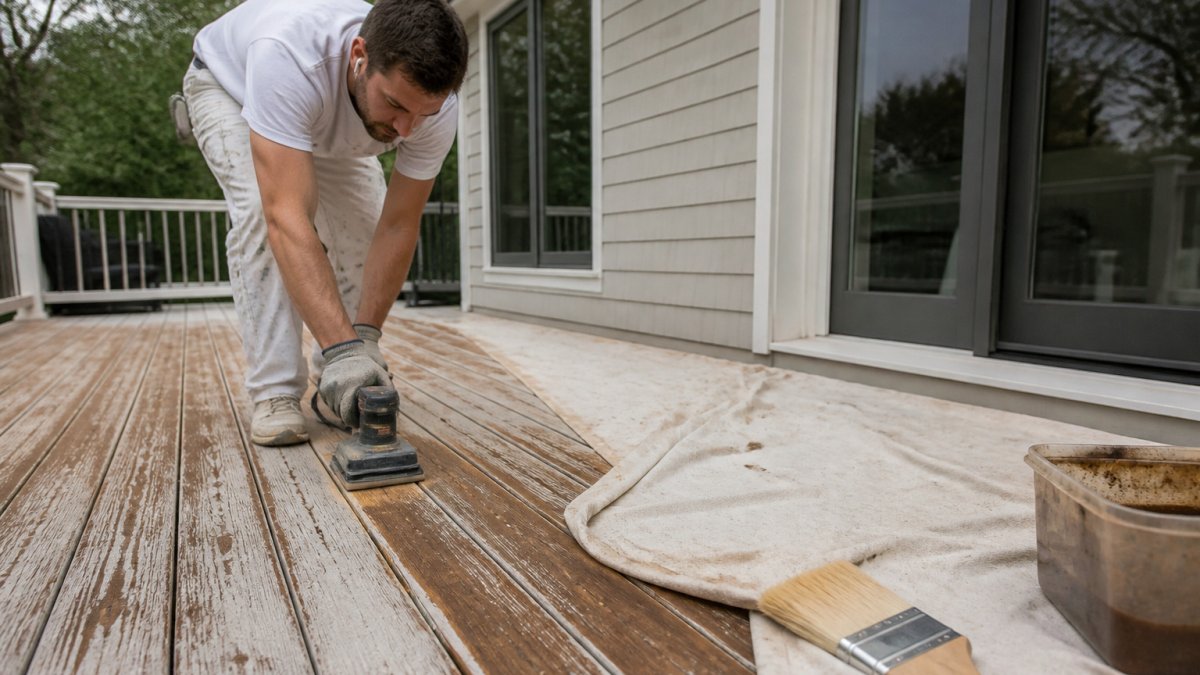
Most staining failures start before the first coat goes on. Old stain, dirt, mildew and loose fibers stop new stain from absorbing evenly. Surface preparation includes cleaning, sanding where needed, and letting the wood dry to the right moisture level. For a parallel look at how thorough prep drives a smooth finish, read how to paint a ceiling for a smooth finish.
| Step | Purpose | Why It Matters |
|---|---|---|
| Cleaning | Remove dirt, mildew and grime | Stain absorbs evenly |
| Sanding | Smooth raised grain and old finish | Better adhesion |
| Drying | Reach proper moisture level | Prevents trapped water |
| Testing | Check color on a sample board | Avoids surprises |
How Often to Stain a Deck and What Affects the Schedule
Stain does not last forever. Sun exposure, foot traffic, climate and the type of stain all change how often a deck needs attention. Before you book anyone, what to ask before hiring a painter lists useful questions for comparing estimates. Many homeowners in the Chicago area plan to reassess their deck every few years, then restain when water no longer beads on the surface.
Several factors shift the schedule:
- Direct sun exposure on south- and west-facing boards
- Heavy foot traffic or furniture use
- Freeze-thaw cycles and winter moisture
- Stain type, whether oil-based or water-based
Watch out: Waiting until the wood turns gray and rough makes prep longer and more expensive. Checking the surface every year helps you catch wear early.
Understanding Wood Staining Cost and What You Pay For
When you compare quotes, look at what is included:
- Cleaning and any repair work before staining
- Sanding and surface preparation
- Stain product and number of coats
- Cleanup and final inspection
Professional Staining vs. DIY: Where the Real Differences Are
Common DIY pitfalls include:
- Skipping thorough cleaning, which causes blotching
- Applying stain in direct heat or before rain, which affects drying
- Using too much stain, which leads to sticky or peeling results
Choosing a Staining Contractor and Booking Your Free Estimate
Frequently Asked Questions
How often should you stain treated wood?
Most pressure-treated wood benefits from a fresh coat of stain every one to three years, depending on sun exposure, rainfall and foot traffic. South- and west-facing decks often need attention sooner than shaded ones. Before restaining, check whether the surface still beads water; if water soaks in and darkens the wood, the protective layer has worn thin. Treated lumber also needs to dry out for several weeks after installation before the first stain goes on, and a professional crew can check moisture content and recommend the right timing for your boards.
Is it necessary to clean wood before staining?
Yes. Dirt, mildew, graying and old peeling finish prevent new stain from absorbing evenly, which leads to blotches and early failure. Cleaning usually means a wood-specific cleaner, scrubbing and a thorough rinse, followed by a full drying period. Sanding may also be needed to open the grain on older surfaces. Skipping this step is one of the most common reasons a DIY stain job looks good for a season and then flakes or fades unevenly.
Is professional wood staining worth the cost?
For many homeowners, yes, because the value comes from preparation, product selection and correct application rather than the stain itself. A professional crew handles cleaning, repairs, sanding and even coverage, and typically provides a final walkthrough to check the finish. Always Pro Painters offers a free estimate so you can compare the scope of work, materials and timeline against your own budget. Pricing depends on the size of the project, the condition of the wood and the product chosen, so request a quote for current figures.
How long does professional wood staining take?
Timelines vary with the size and condition of the surface, but most residential deck or siding projects are completed within a few days once prep work is finished. Weather is the biggest variable, since stain needs dry conditions and mild temperatures to cure properly. Drying time between steps also affects the schedule. Ask for a written timeline with your estimate so you know when the work starts, when the surface will be usable again and how weather delays are handled.