 Comparison
Oil-Based Paint Alternatives for McHenry Exteriors
Quick Summary
Oil-based paint alternatives include 100% acrylic latex and waterborne alkyd, both water-based coatings that clean up with soap and water. Acrylic latex suits wood siding and masonry because it stays flexible, while waterborne alkyd suits trim, doors, and metal. Previously oil-painted surfaces usually need a bonding primer and an adhesion test first.
- Acrylic latex stays flexible as wood expands and contracts, making it a strong fit for siding.
- Waterborne alkyd levels smoothly and cures harder, suiting trim, doors, and metal surfaces.
- Latex may not bond reliably over a chalky, glossy, or failing oil-based coat without proper prep.
- Use a bonding primer on bare or chalky wood to prevent early peeling.
- Test adhesion on an old oil film before committing to a full exterior repaint.
Table of Contents
- Why Homeowners Are Moving Away From Oil-Based Exterior Paint
- Latex vs Oil-Based Exterior Paint: How the Two Compare
- Waterborne Alkyd and Acrylic Latex Options for Exterior Wood, Metal and Masonry
- Professional Exterior Painting Surface Preparation for a Lasting Finish
- Durability of Acrylic Exterior Paint in McHenry's Freeze-Thaw Climate
- Lifecycle Cost, Cleanup, VOC Rules and Product Availability
- Choosing an Alternative and Planning Your Exterior Repaint
- Frequently Asked Questions
Why Homeowners Are Moving Away From Oil-Based Exterior Paint
Oil-based paint alternatives have gained ground as oil-based exterior paint, once the default for decades, still covers many McHenry homes. Homeowners are now switching because water-based coatings are easier to work with, clean up with water, and are less harsh to apply. If your house has an oil-based finish, you can still repaint it with a modern alternative, but the transition needs planning. Each step matters for how the new coat bonds and lasts.
Many homeowners find that the main pain points are slow drying, strong odor, and solvent cleanup. A common approach is to switch to acrylic latex or waterborne alkyd, which address those issues while keeping a hard, durable film. Both can work well on wood siding, trim, and metal, though success depends on preparation and product choice.
Latex vs Oil-Based Exterior Paint: How the Two Compare
Latex paint is water-based and uses acrylic or vinyl resins. Oil-based paint uses alkyd resins dissolved in mineral spirits. The practical differences show up in drying time, flexibility, cleanup, and odor.
Latex generally dries faster, cleans up with soap and water, and stays more flexible as wood expands and contracts. Oil-based paint can level out to a smooth, hard surface and bonds well to bare wood, but it yellows over time and tends to become brittle. It also produces stronger fumes and requires solvent cleanup.
Quick comparison:
| Factor | Oil-Based | Acrylic Latex |
|---|---|---|
| Drying time | Slow, often 8 hours or more to recoat | Faster, typically a few hours |
| Cleanup | Mineral spirits | Soap and water |
| Flexibility | Can become brittle | Stays flexible |
| Odor | Strong | Low |
| Yellowing | Common over time | Minimal |
Watch out: Latex will not reliably bond over an old oil-based coat that is chalky, glossy, or failing without proper prep. Test adhesion before committing to a full repaint.
Waterborne Alkyd and Acrylic Latex Options for Exterior Wood, Metal and Masonry
Waterborne alkyd and acrylic latex are not interchangeable across every surface. The right pick depends on the substrate, how much it moves, and what coating is already on it. The table below is a starting point, not a substitute for the product data sheet.
| Substrate | Best-fit alternative | Why | Primer note |
|---|---|---|---|
| Wood siding and trim | 100% acrylic latex | Stays flexible as boards expand and contract; resists cracking at joints | Bonding primer on bare or chalky wood |
| Doors and window sashes | Waterborne alkyd | Harder film that resists blocking and hand contact | Light sand, then alkyd-compatible primer |
| Metal railings and downspouts | Waterborne alkyd or acrylic with rust-inhibiting primer | Needs a hard, tight film over a prepared metal surface | Rust-inhibiting primer is mandatory |
| Stucco and masonry | Breathable masonry-rated acrylic | Lets moisture vapor escape and resists efflorescence | Masonry primer or block filler as needed |
| Previously oil-painted surfaces | Acrylic latex over a bonding primer, or waterborne alkyd | Bonding primer bridges the slick oil film | Adhesion test before full application |
Waterborne alkyd behaves like an oil paint during application: it levels out, leaves fewer brush marks, and cures to a harder film. It cleans up with water, which is the main practical advantage over traditional alkyd. It is the better choice for trim, doors, and metal where a smooth, durable skin matters more than maximum flexibility.
Acrylic latex is the workhorse for siding and masonry. It stays flexible through seasonal movement, resists blistering when moisture pushes through the wall, and touches up easily. On bare wood, a quality bonding primer is what makes the topcoat grip; skipping it is the most common cause of early peeling.
Watch out: A "paint and primer in one" product does not replace a bonding primer over a chalky, glossy, or failing oil film. Read the data sheet for the recoat window and the minimum application temperature before you buy, because those two numbers decide whether the job can be done this season.
For bare wood, sand to 80-120 grit, dust off, and prime within the product's recoat window. For metal, remove rust to bare metal, spot-prime with a rust-inhibiting primer, and topcoat after the primer's stated cure time. For masonry and stucco, patch and cure repairs first, then apply a breathable masonry-rated acrylic so trapped moisture can escape instead of blistering the film.
Professional Exterior Painting Surface Preparation for a Lasting Finish
Preparation determines whether the new coat sticks. Scrape or sand peeling and failing paint down to a sound edge. Wash the surface to remove chalk, dirt, and mildew, and let it dry fully before priming.
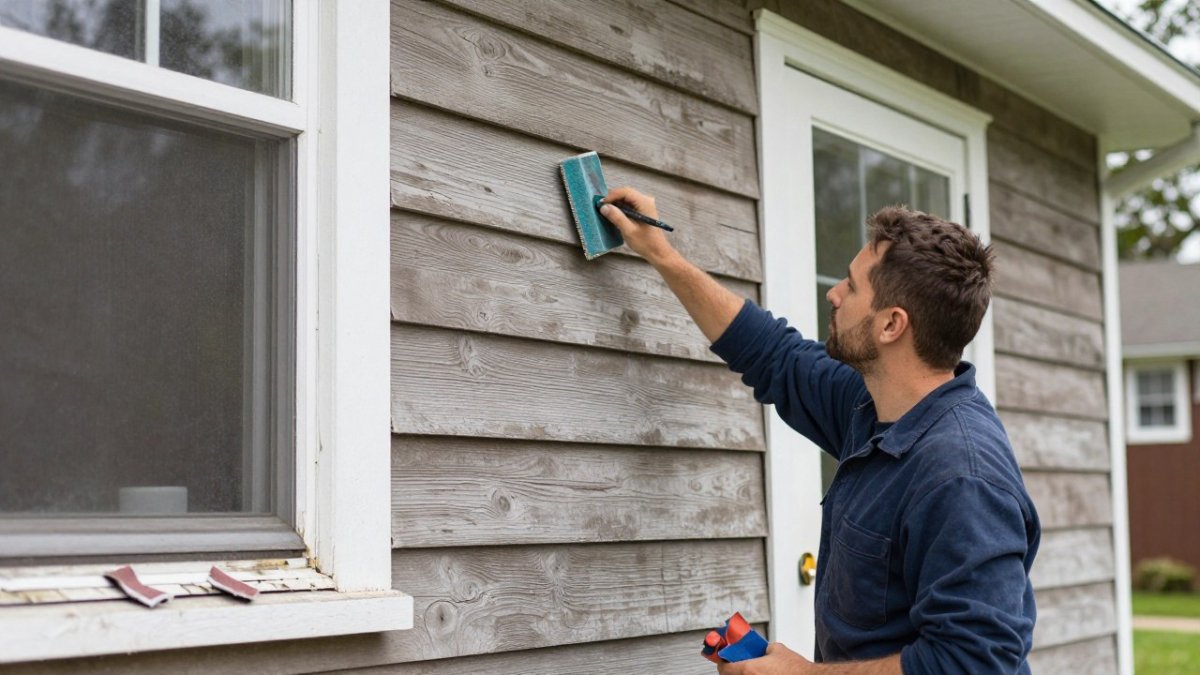
Spot-prime bare wood and any repaired areas with a bonding primer compatible with your topcoat. Fill cracks and nail holes with exterior-rated filler, then sand smooth. Check that caulk around windows and trim is intact before you paint.
Skipping these steps is the most common reason exterior coatings fail early. For a deeper, step-by-step walkthrough of preparing surfaces, see surface preparation guide. Always Pro Painters builds its exterior work around this preparation stage, since it is the part most likely to be cut short on a rushed job.
Durability of Acrylic Exterior Paint in McHenry's Freeze-Thaw Climate
McHenry sees hot summers, humid stretches, and cold winters with repeated freeze-thaw cycles. Those swings push moisture into the film and make the wood move, which tests flexibility and adhesion.
Acrylic latex generally handles these conditions well because it stays flexible and resists blistering from moisture. Oil-based films can crack and peel when the substrate moves, especially on north-facing and shaded walls that stay damp longer.
Paint durability also depends on application timing. Avoid painting when temperatures fall below the product's minimum application range or when rain is expected before the film cures. Follow each product's label for recoat windows and cure times.
Lifecycle Cost, Cleanup, VOC Rules and Product Availability
Price per gallon alone does not show the full cost of an exterior repaint. Total cost depends on material, labor, prep, cleanup, and how often the coating has to be redone.
A practical lifecycle framework. For each option, add up four things: (1) gallons needed for your square footage at the label's spread rate, (2) the labor hours for prep and application, (3) the cleanup and disposal burden, and (4) the expected years before the next repaint. Divide total cost by years of service to get a comparable annual figure.
Cleanup and disposal. Water-based products clean up with soap and water. Solvent-based cleanup requires mineral spirits, which may need to be handled as hazardous waste depending on local rules. Leftover paint and solvent-soaked rags should go to a household hazardous waste collection event or facility; never pour them down a drain or into storm sewers. Check your municipality's household hazardous waste schedule before you start, not after.
VOC rules and how to verify them. Volatile organic compound limits for paint and coatings are regulated, and the applicable rules can vary by location. Check the product's safety data sheet and confirm current requirements with your local building or environmental health office. Many water-based exterior products are formulated well below solvent-paint VOC levels, but "low VOC" is a formulation claim, not a guarantee of performance. To verify what applies to your project: check the product's safety data sheet for its VOC content in grams per liter, confirm the product is labeled for exterior architectural use in your area, and call your local building or environmental health office if you are unsure whether a local rule applies. Requirements and product availability can change, so confirm current status with your paint supplier and municipality before ordering. For a full comparison of costs and options, see the residential exterior painting guide.
**
Watch out: A low VOC number on the label does not mean the coating will bond to an old oil film. VOC content and adhesion are separate questions, and only an adhesion test answers the second one.
Choosing an Alternative and Planning Your Exterior Repaint
Start by identifying the substrate and the existing coating. Wood siding with a sound oil-based film may suit a direct acrylic topcoat after proper cleaning and adhesion testing. Failing oil over bare wood usually needs scraping, priming, and a compatible topcoat. Metal trim may call for waterborne alkyd or a rust-inhibiting system.
Next, set your budget by comparing lifecycle cost, not just the gallon price. Ask for product data sheets and confirm the adhesion and recoat information for your specific surface.
If you want to see what a full job looks like, review our McHenry Exterior Repaint to understand how renewed siding, porch columns, railings, trim, and front-entry details come together on a real project. For the service itself, see Exterior Painting in McHenry for siding, trim, porches, and railings.
When you are ready to compare contractors, our painters in McHenry who start with the details page covers interior, exterior, drywall, cabinet, and commercial work, and lets you request a free estimate.
Contact Always Pro Painters to request a free estimate for your exterior repaint.
Frequently Asked Questions
What can I use instead of oil-based exterior paint?
The most common alternatives are 100% acrylic latex paints and waterborne alkyd paints. Acrylic latex is flexible, cleans up with soap and water, has low odor, and handles freeze-thaw cycles well when applied over properly prepared surfaces. Waterborne alkyd offers a harder, enamel-like finish closer to oil-based products, which can suit trim and doors. Choose based on the substrate, the existing coating, and how much hardness versus flexibility the surface needs.
Does exterior paint have to be oil-based?
No. Oil-based exterior paint is no longer a requirement for most exterior surfaces. Modern latex and waterborne alkyd products are widely used on wood siding, trim, metal and masonry. Oil-based products still have niche uses, but many homeowners and painters choose water-based coatings for easier cleanup, lower odor and better flexibility as wood moves with temperature changes. Check the product label for the surfaces it is rated for.
How do water-based acrylic paints compare to oil-based options for weather resistance?
Quality 100% acrylic latex exterior paints generally resist moisture, UV fading, blistering and peeling well when the surface is clean, dry and properly primed. Oil-based coatings can penetrate wood well but tend to become brittle over time, which can crack under the expansion and contraction of Midwest winters and summers. Acrylic latex stays more flexible. Performance still depends heavily on surface preparation and application conditions.
What are the downsides of using oil-based paint on exteriors?
Oil-based paint has a strong odor, requires solvent cleanup such as mineral spirits, and takes longer to dry and recoat. Its film can become brittle and crack or chalk as it ages, especially on wood that expands and contracts. Oil-based products also carry higher VOC content, and local and state rules on VOC limits should be checked before purchase. Many painters now recommend water-based alternatives unless a specific surface requires oil-based performance.