
 ultimate-guide
Cost of Interior Painting Chicago 2026: Complete Pricing Guide
Table of Contents
- What Drives the Cost of Interior Painting in Chicago in 2026?
- Interior Painting Cost Per Square Foot in Chicago
- Room-by-Room Cost Breakdown for Chicago Homes
- Drywall Repair and Surface Prep Costs: What to Expect
- Labor vs. Materials: Where Your Money Goes
- Average Duration of Interior Painting Projects in Chicago
- How to Get Accurate Painting Quotes and Compare Bids
- Frequently Asked Questions
Last Updated: September 12, 2026
What Drives the Cost of Interior Painting in Chicago in 2026?
The cost of interior painting chicago 2026 hinges on a single principle: you are buying preparation, not pigment. Paint itself is the cheapest line item on any estimate. Labor, surface prep, and the condition of your walls are what move the number.
At Always Pro Painters, we understand that a condo with smooth, previously painted walls prices very differently from a century-old two-flat with cracked plaster and layers of old wallpaper adhesive.
Three forces shape every quote this year:
- Labor availability. The post-pandemic market shifted. Many experienced painters left the trades, and the remaining crews can be selective about which jobs they take.
- Surface condition. Chicago's older housing stock means more patching, sanding, and priming than a newer suburban build.
- Paint quality. Premium coatings cost more per gallon but cover better and last longer, which changes the total project cost in both directions.
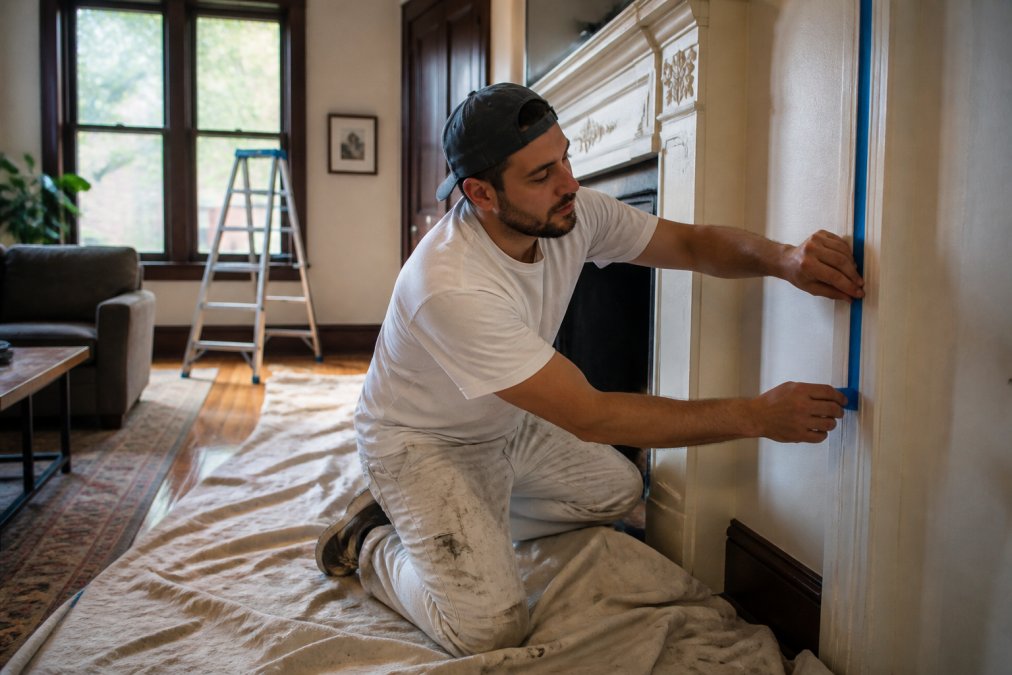
Labor Rates and the Post-Pandemic Market
Labor is the largest single driver of any interior painting estimate. A common approach is to think of it as roughly two-thirds of your total, though that split shifts with project scope.
What most guides miss is that labor isn't priced by the hour in most residential quotes. It's priced by the job, based on square footage and complexity. A painter quoting your 1,200-square-foot condo is estimating how many days it takes, then multiplying by a crew rate. That's why two bids for the same rooms can differ by thousands.
The post-pandemic labor market matters here. Fewer skilled painters means crews with full schedules quote higher, and the cheapest bid often signals a crew cutting corners on prep to move faster.
Interior Painting Cost Per Square Foot in Chicago
Interior painting chicago cost per square foot is the standard way contractors estimate, but it is a benchmark, not a fixed rate. Most residential interior work lands somewhere in a broad band, and where your project falls inside that band depends on prep, ceiling height, finish type, and access.
The number that trips homeowners up is that painters measure paintable wall area, not floor area. A 1,000-square-foot apartment with standard 8-foot ceilings typically carries roughly 2,500 to 3,000 square feet of paintable surface once you add walls, ceilings, and multiple rooms. That is the figure a crew is actually pricing.
A Worked Example: 1,200-Square-Foot Condo
Say you own a 1,200-square-foot two-bedroom with 9-foot ceilings, smooth previously painted walls, and standard trim. A crew walks the unit, measures paintable wall area at roughly 3,200 square feet, and prices the job as follows:
| Line Item | How It Is Priced | What Moves It |
|---|---|---|
| Walls, two coats | Base rate per sq ft of wall area | Condition, color change, finish |
| Ceilings | Add-on per sq ft of ceiling area | Height, access, existing texture |
| Trim and baseboards | Priced per linear foot | Detail level, number of coats |
| Doors and casings | Priced per door | Panel style, hardware masking |
| Prep and patching | Priced by scope, not area | Cracks, nail pops, prior repairs |
Notice that only the first two lines are truly square-foot priced. Trim, doors, and prep are priced by the piece or by the scope, which is why a square-foot quote alone never tells the whole story.
Why the Same Square Footage Prices Differently
Two condos of identical size can produce bids that differ by thousands. The reasons are almost always structural, not cosmetic:
- Ceiling height. A vintage walk-up with 11-foot ceilings has more wall area and requires taller ladders or scaffolding. Both add labor hours.
- Wall texture. Smooth drywall takes paint efficiently. Heavy texture, plaster, or a previous skim coat absorbs more product and slows the roller.
- Color change. Going from a dark saturated color to white often requires an extra coat or a tinted primer, which is a material and labor add.
- Access. A high-rise unit with a freight elevator window, a service elevator reservation, and building-mandated floor protection adds coordination time that a single-family home does not.
How to Use Square-Foot Pricing for Your Budget
Treat square-foot pricing as a starting benchmark, then adjust for your specific conditions. Multiply your paintable wall area by a base rate, add for ceilings, trim, and prep, and then sanity-check the total against the scope a contractor writes after a walkthrough.
The honest answer: no responsible painter quotes from square footage alone. A site inspection catches what measurements miss, like the ceiling height in a vintage walk-up, the wall repair needed behind a radiator, or the lead-safe work practices required in pre-1978 housing under the EPA's Renovation, Repair and Painting Rule. Any of those can move a bid more than square footage ever will.
Room-by-Room Cost Breakdown for Chicago Homes
Room type changes the math more than total square footage does. A bathroom with tight trim and a ceiling fan prices higher per square foot than an open living room.
- Bedrooms: Simplest rooms. Fewer fixtures to mask, standard ceiling height, minimal trim.
- Living and dining rooms: Larger wall area, more trim and molding, often higher ceilings.
- Kitchens: Cabinets, backsplash edges, and appliances create masking and cutting work.
- Bathrooms: Small but detailed. Moisture-resistant paint and tight trim work add labor.
- Hallways and stairwells: Scaffolding and ladder work slow the crew down.
Drywall Repair and Surface Prep Costs: What to Expect
Drywall repair and surface prep costs are the line item homeowners underestimate most. Prep is where a paint job succeeds or fails, and it's the first thing cheap bids cut.
Surface preparation includes filling nail holes, patching drywall, sanding rough spots, caulking gaps around trim, and applying primer to bare or repaired areas. In older Chicago homes, expect more of it. Plaster walls crack. Previous paint jobs leave drips and uneven texture.
Labor vs. Materials: Where Your Money Goes
Materials are the smaller share of your bill. A common pattern in residential interior work is that labor and prep make up the majority of the total, with paint, primer, tape, and drop cloths accounting for the rest. The exact split shifts with the job, but the direction is consistent: you are paying for time and skill far more than for pigment.
What the Labor Line Actually Buys
When a crew prices a job, the labor number is not a single hourly rate multiplied by hours. It is a bundle of tasks, each with its own time cost:
- Masking and protection. Floors, furniture, fixtures, and hardware. On a furnished condo this alone can consume a half day.
- Surface prep. Filling nail holes, caulking trim gaps, sanding, patching plaster or drywall, and spot-priming bare areas.
- Cutting in. Brushing edges at ceilings, corners, and trim before rolling. This is the slowest, most skill-dependent step.
- Rolling. The fastest step, and the one most affected by wall texture and ceiling height.
- Cleanup and walkthrough. Removing tape, repositioning furniture, and correcting touch-ups.
A cheap quote and a thorough quote rarely differ on the paint. They differ on how many of those five steps get compressed.
Why Labor Rates Have Shifted
The residential painting labor market tightened after 2020 and has not fully loosened. Experienced painters left the trades, and the crews that remain can be selective. The practical effect for homeowners is that the gap between a low bid and a mid-range bid has widened, and the low bid is more likely than ever to reflect skipped prep rather than a hungry crew.
Union and non-union crews also price differently. Union-affiliated painters carry higher wage and benefit costs, which shows up in the labor line. That is not automatically a reason to avoid them, it often correlates with more consistent prep standards and better-trained crews, but it does explain why two bids for the same rooms can land far apart.
The Low-VOC and Designer Paint Premium
One line item almost no cost guide discusses is the material upgrade. Standard contractor-grade paint is the cheapest option per gallon. Moving up the ladder changes both the material cost and, sometimes, the labor cost:
- Low-VOC and zero-VOC coatings. Priced above standard lines. They matter most in bedrooms, nurseries, and any home occupied during the work.
- Premium and designer brands. Higher per-gallon cost, but often better hide and durability, which can mean fewer coats and a longer service life.
- Specialty finishes. Matte, eggshell, satin, and semi-gloss are priced differently, and some premium lines require specific primers.
The trade-off is real in both directions. A premium coating can reduce total cost if it eliminates a third coat, and it can raise total cost if the crew charges more for the application. Ask your contractor to quote both a standard and an upgraded coating so you can see the actual delta rather than guessing.
Verify Before You Compare
Before you compare labor lines across bids, verify that each contractor is legitimate. In Illinois, a roofing contractor must be licensed by the state, but painting contractors are not covered by a statewide licensing requirement, which means the burden falls on you. Ask for:
- A current certificate of general liability insurance
- Proof of workers' compensation coverage, or a written exemption
- A written contract with scope, prep detail, coat count, and payment schedule
- Confirmation the crew will follow EPA lead-safe practices if your home was built before 1978
A contractor who cannot produce insurance and a written scope is not a cheaper option. They are an uninsured risk, and the savings disappear the first time a ladder goes through a window or a worker is injured on your property.
EPA Renovation, Repair and Painting Rule requirements for pre-1978 housing
Average Duration of Interior Painting Projects in Chicago
The average duration of interior painting projects in Chicago depends on scope, crew size, and drying time between coats. A single room can finish in a day. A full-home interior typically runs several days to a couple of weeks.
Timeline drivers include:
- Number of rooms and total wall area
- Crew size (a two-person crew takes longer than four)
- Prep volume (heavy patching adds days)
- Coat count and dry time (premium paints often need longer between coats)
If you're prepping a home for sale, a full interior refresh can usually be scheduled to finish before your listing date, provided you book the crew early.
How to Get Accurate Painting Quotes and Compare Bids
Getting accurate quotes starts with a site inspection, not a phone estimate. Any painter who quotes without seeing your walls is guessing, and guesses protect them, not you.
When comparing bids, look past the bottom line:
- Does the quote list prep work specifically, or just say "prep included"?
- How many coats of paint are included?
- Is it a fixed price contract or an hourly rate?
- Which paint brand and finish are specified?
- Is there a written timeline and a final walkthrough?
A fixed price contract protects you from surprise charges. An hourly rate exposes you to overruns. For most homeowners, fixed price with a detailed scope is the safer choice.
Our process starts with detailed surface preparation, from drywall repairs to caulking and sanding, so paint goes onto a clean foundation. We finish every job with a walkthrough to confirm the details meet your expectations, and we build the schedule around the finish, not the rush.
For current pricing on your specific project, request a free estimate from Always Pro Painters and get a scope written for your walls, not a generic number.
Frequently Asked Questions
How much should it cost to paint the interior of a 2000 sq ft house in Chicago?
The cost depends on factors like wall condition, ceiling height, and paint quality. For a 2000 sq ft house, you can expect a range based on square footage and complexity. Always Pro Painters provides a free estimate tailored to your home's specific needs. Contact us for a detailed quote.
Why is paint so expensive in 2026?
Paint costs have risen due to supply chain adjustments and increased demand for low-VOC and specialty finishes. Labor rates have also increased post-pandemic as skilled painters are in high demand. In Chicago, older homes often require more prep work, which adds to the overall cost.
What is the average cost to paint a room in Chicago?
A standard 12x12 room might cost between $400 and $800, depending on prep work, paint quality, and ceiling height. Rooms with extensive drywall repair or trim work will be higher. For an accurate estimate, schedule a free consultation with Always Pro Painters.
Does the cost of interior painting include surface preparation?
Reputable painters include basic surface preparation such as cleaning, sanding, and priming. However, extensive drywall repair, wallpaper removal, or lead paint abatement may be extra. Always Pro Painters includes detailed prep in every quote to ensure a solid finish.
How long does it take to paint the interior of a house?
The average duration of interior painting projects varies. A single room might take 1-2 days, while a whole house can take 1-2 weeks. Factors include the number of rooms, prep work required, and drying time between coats. Always Pro Painters provides a timeline in your estimate.
Do I need to move furniture before painters arrive?
Professional painters will move small items and cover furniture with drop cloths. However, removing fragile items and wall decor beforehand is recommended. Always Pro Painters takes care to protect your belongings and leaves your home clean after the job.
Are there any additional costs I should be aware of?
Additional costs may include painting ceilings, trim, baseboards, or repairing drywall. Color consultation and specialty finishes like faux or Venetian plaster also add to the total. Always Pro Painters provides a detailed breakdown so you know exactly what you're paying for.
How can I ensure I'm getting a fair price for interior painting?
Get at least three detailed estimates that specify the scope of work, materials, and prep included. Compare labor rates, not just total price. Check for insurance and licensing. Always Pro Painters offers transparent quotes and a final walkthrough to ensure satisfaction.
Interior painting costs in Chicago come down to preparation, labor, and the condition of your home, not the price of a gallon of paint. If you want a finish that holds up, the crew doing the work matters more than the number on the lowest bid. Always Pro Painters brings detailed surface preparation, clean lines, and a final walkthrough to every project, so you get a solid finish without shortcuts. Get started with Always Pro Painters and request your free estimate today.