
 Listicle
Which Paint Colors Actually Increase Home Resale Value in 2026?
Table of Contents
- Which Paint Colors Increase Home Resale Value in 2026: Quick Comparison
- Best Neutral Paint Colors to Sell a House
- Best Interior Paint Color for Selling a House, Room by Room
- What Exterior House Color Sells Best
- Paint Colors to Avoid When Selling a House
- How Much Paint Work Costs and What Return to Expect
- Booking a Free Estimate Before Your Listing Date
- Frequently Asked Questions
Which Paint Colors Increase Home Resale Value in 2026: Quick Comparison
Last Updated: November 16, 2026
Choosing the right paint colors resale value depends on in 2026 comes down to one question: will the next buyer see a clean, move-in-ready home or a space that needs work? This guide is intended to help Chicago-area sellers make that call. Published research from Zillow and OpenDoor points toward buyer-friendly neutrals and nature-inspired tones, but the evidence on exact resale gains is limited.
Quick Picks:
- Best overall neutral: Warm whites and greige, which suit most buyers and most rooms
- Best accent color: Pale blue or sage green in living spaces and bathrooms
- Safest exterior choice: Warm, muted tones that complement brick and stone
Here is how the main options compare:
| Color Family | Where It Works Best | Buyer Appeal | Key Caution |
|---|---|---|---|
| Warm white / off-white | Every room | Broad | Can look yellow in north-facing light |
| Greige / warm gray | Living areas, hallways | Broad | Cool gray undertones can clash |
| Pale blue | Living rooms | Moderate to strong | Less universal than neutrals |
| Sage green | Bathrooms, bedrooms | Moderate | Pairs best with warm wood |
| Charcoal | Kitchens, accent walls | Mixed | Shows dust and scuffs easily |
| Bold or trend colors | Rarely recommended | Narrow | Reduces the buyer pool |
The sections below walk through each category, room by room, and end with the colors to avoid and what painting work typically involves.
Best Neutral Paint Colors to Sell a House
Neutral paint is the safest choice when you are thinking about paint colors resale buyers respond to, especially when preparing a home for sale. Buyers can picture their own furniture against it, and it signals that the home has been maintained. Real estate guidance from sources such as Zillow's guide to paint colors that sell a house consistently favors these families over bold statement walls.
Neutrals still vary in how they read under real light. A shade that looks soft in a showroom can look flat or yellow in a north-facing room, so test samples on the wall before you commit.
Warm whites and off-whites
Warm whites are the most common recommendation for resale, and for good reason. They look clean without the stark, clinical feel of a bright white. Off-whites with a slight cream or beige undertone work particularly well in older homes with wood trim.
The main risk is undertone. A white with too much yellow can look dated under warm bulbs. Compare a sample against the trim and ceiling before you paint the whole room, because the trim color matters as much as the wall color.
Greige, taupe, and warm gray shades
Greige blends gray and beige, and it has become one of the most frequently recommended neutrals for sellers. It reads as warm enough for cozy spaces and calm enough for modern ones. Mushroom taupe and warm gray sit in the same family and tend to work well in living rooms and hallways.
Avoid grays with a cool blue or purple cast. Those undertones can make a home feel cold and can clash with flooring and fixtures a buyer already sees as neutral.
Best Interior Paint Color for Selling a House, Room by Room
Room-specific guidance is useful because a color that works in a bathroom may feel wrong in a dining room. The recommendations below reflect common buyer expectations rather than guaranteed results.
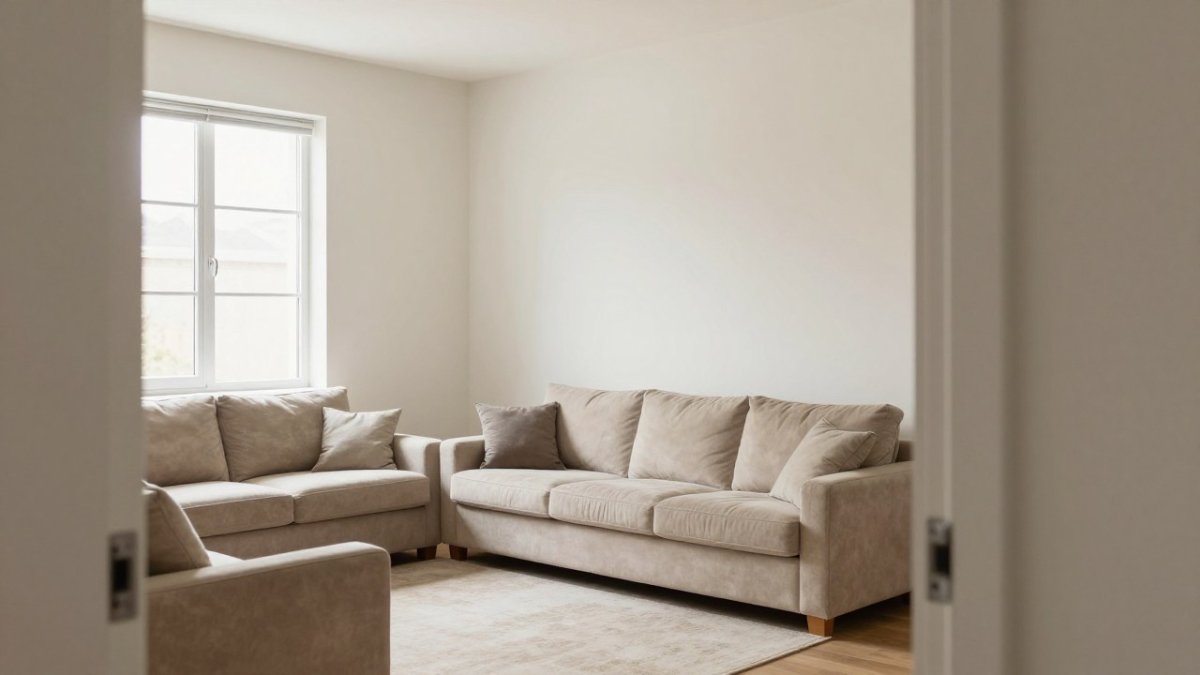
A freshly painted living room with warm off-white walls, neutral furnishings and natural window light sets the tone for the whole home, so start there when budgets are limited.
- Living room: Warm white, greige, or pale blue. Pale blue is a reported favorite for living spaces, but it is less universal than a neutral, so use it only if the rest of the home is neutral.
- Kitchen: Warm white for cabinets and walls. Charcoal is sometimes recommended as an accent, but it shows dust and fingerprints, so use it sparingly.
- Bedrooms: Soft neutrals and muted tones. Chocolate brown has been cited for bedrooms in some guides, though it works best as an accent wall rather than a full-room color.
- Bathrooms: Sage green or soft blue-gray. Both feel fresh and spa-like without overwhelming a small space.
A practical rule: keep the main living areas neutral, then use one or two accent colors in smaller rooms. That approach gives buyers a sense of personality without asking them to repaint.
What Exterior House Color Sells Best
Exterior color affects curb appeal, which is often the first impression a buyer gets from a listing photo or a drive-by. Sellers usually do best with warm, muted tones that complement the materials already on the house, such as brick, stone, or natural wood. But the exterior is harder to get right than an interior because you cannot easily repaint it, the light changes all day, and the color has to work with fixed elements you are not going to replace before listing.
Start with the fixed materials, not the paint chip. Brick, stone, roofing, and window frames set the palette. A warm gray-green that looks elegant on a painted siding home can turn muddy against red brick, and a crisp white that reads clean on new construction can look stark next to aged stone. The practical move is to pull two or three undertones directly from the roof and the masonry, then choose a body color one or two steps lighter or darker than the dominant material.
The right exterior color depends on the roofline, the surrounding homes, and how much direct sun the facade receives. Bring a sample board outside and check it at several times of day, because a north-facing facade and a south-facing one will read the same color very differently.
Trim and doors do more work than most sellers expect. A common pattern is a body color in a warm white or greige, trim one shade lighter or a true white, and a front door in a deeper accent such as navy, dark olive, or charcoal.
Watch out: painting the exterior to match a trend you saw online can backfire if the roof and masonry pull a different undertone. Test the body, trim, and door colors together on a board in full sun before committing, and check how the combination looks in a phone photo, since that is how many buyers will first see the house.
A cohesive whole-home palette is the real goal. If the interior is warm white and greige, carry that warmth to the exterior body color and use the door as the one point of contrast. That coordination reads as intentional to a buyer and avoids the common problem of a cool gray exterior paired with a warm cream interior, which can make a home feel disjointed from the first step inside.
Paint Colors to Avoid When Selling a House
Some colors narrow your buyer pool more than they help. The most common problems are bold, personal, or trend-driven shades that a buyer has to repaint before they can move in.
- Bright or saturated colors such as red, bright yellow, or hot pink on full walls
- Very dark walls in small rooms, which can make the space feel smaller and gloomier
- Strong trend colors that may look dated within a few years
- Mismatched undertones that clash with flooring, countertops, or trim
Watch out: a color that looks fine on a single swatch can overwhelm a room once it covers all four walls. Always test a large sample before committing.
How Much Paint Work Costs and What Return to Expect
Painting is one of the more affordable pre-sale improvements, but pricing depends on the size of the home, the condition of the walls, how much prep is needed, and whether you are painting interior, exterior, or both. Rather than quote a single number that would be misleading without seeing the property, it helps to understand what drives the range and how to compare bids.
Interior work is usually priced by the room or by square footage of wall area. Pricing depends on the size of the home, ceiling height, trim, and how much patching is required, so request a quote for accurate figures.
Preparation is where most of the labor and most of the result come from. Patching holes, sanding, priming stained or glossy surfaces, and fixing cracks all affect how the final finish looks. A rushed job over poor prep often shows under listing-photo lighting. When you compare bids, ask what prep is included, how many coats are specified, and whether primer is part of the scope. A low bid that skips prep is not a bargain if the finish fails before showings.
On return, the evidence on paint and sale price is mixed, and it does not guarantee a higher sale price. A useful way to think about it is that fresh neutral paint reduces buyer objections and makes the home show well, which can shorten time on market and support the asking price, but it is not a guaranteed financial return. Treat any specific percentage you see online as a correlation from a particular sample, not a promise for your home.
A practical budget framework is to prioritize the rooms buyers see first and most: entry, living room, kitchen, and primary bath. Neutral paint in those spaces delivers the most visible improvement per dollar. Save accent colors and exterior work for after the core interior is done, and get at least two written estimates that itemize prep, paint, and labor so you can compare like for like.
Booking a Free Estimate Before Your Listing Date
If you are preparing to list your home in the coming months, plan the paint work early. Scheduling time before photos and showings gives the walls time to cure and leaves room to fix anything the prep reveals. Always Pro Painters handles interior refreshes with detailed surface preparation and a final walkthrough before we leave.
Request a free estimate to get a quote based on your home's size and condition.
Frequently Asked Questions
What is the best color to paint a house for resale value?
Warm neutrals are the safest choice for most sellers. Warm whites, soft greige and warm gray appeal to a wide range of buyers and make rooms look clean and move-in ready. Real estate research suggests that buyer-friendly neutrals and nature-inspired tones perform well, though no single color guarantees a higher offer. Pick a shade that suits your home's lighting and architectural style, and test samples on several walls before committing to a full repaint.
Which neutral paint colors are best for selling a house?
Warm white, off-white, soft greige and mushroom taupe are the neutral colors most often recommended for listings. They read as calm and clean in photos and let buyers picture their own furniture. Cool, stark whites can look sterile against warm wood floors, so choose undertones that match the flooring and trim in each room. Consistent neutrals across the main living areas also make a home feel larger and better maintained.
Should I repaint my house before selling it?
Repainting is often one of the more cost-effective preparations before a sale, especially when walls are scuffed, dated or in colors that limit buyer appeal. The return depends on the condition of the house, the market and the price point, so it is not guaranteed to recover its full cost. Always Pro Painters offers a free estimate, so you can compare the cost of a full interior refresh against the condition issues you would otherwise need to disclose or negotiate. Current pricing depends on the size and scope of the project, so request a quote for accurate figures.
Do interior or exterior paint colors matter more to homebuyers?
Buyers form their first impression from the exterior, so curb appeal matters a great deal for the first showing. Interior colors, however, influence how buyers feel once they walk in and how easily they picture their own belongings. Both matter, and a coordinated palette that works inside and out tends to look intentional. If budget is limited, start with the front door and the most visible interior rooms such as the living room and kitchen.