 blog
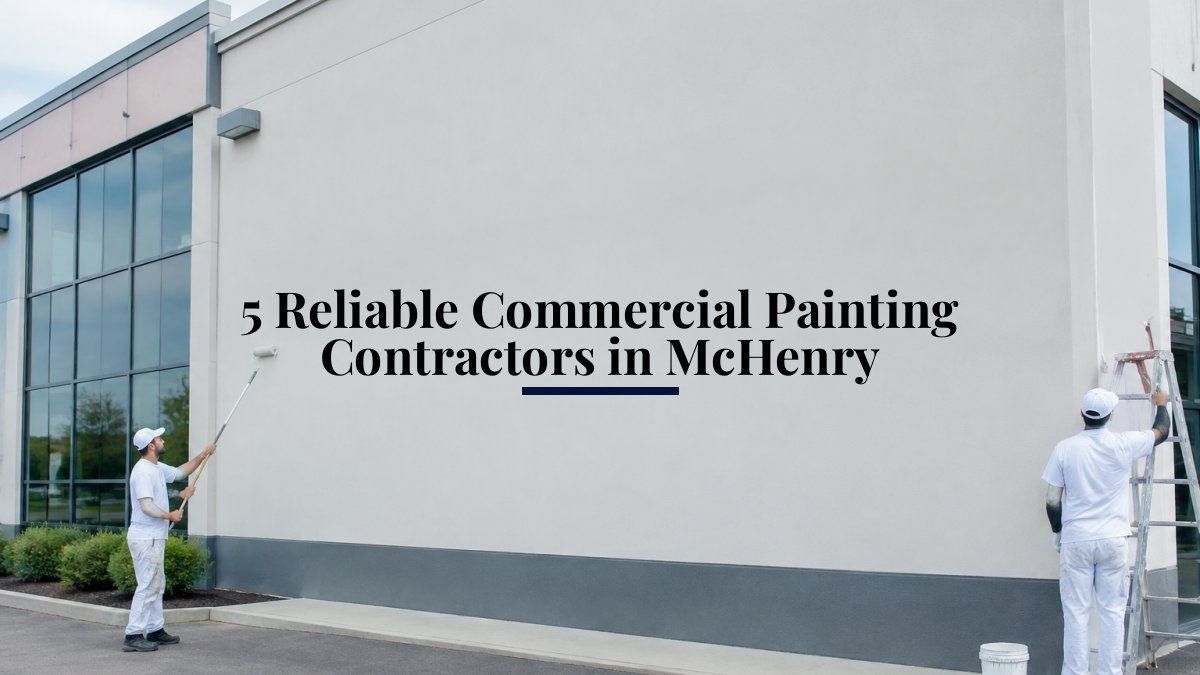
5 Reliable Commercial Painting Contractors in McHenry
Quick Summary
A reliable commercial painting contractor is judged by how thoroughly they handle surface preparation, how clearly they write the scope, and how well the crew fits around your operations. Compare at least three commercial painting contractors on the same walkthrough, square footage and schedule window before choosing.
- Ask for a written scope that names prep steps such as patching, sanding, priming and caulking.
- Request current certificates of insurance and confirm licensing before work begins.
- Get at least two references from recent commercial jobs of similar size and use.
- Compare bids by line item, since differences often reflect scope rather than price.
- Agree in writing on after-hours, weekend or phased scheduling and the workmanship warranty.
Table of Contents
- What Makes a Commercial Painting Contractor Reliable in McHenry
- How to Choose a Commercial Painting Contractor
- Five Commercial Painting Contractors Worth Considering
- Commercial Interior Painting: Scope, Scheduling and Business Hours
- Commercial Painting Cost per Square Foot and What Drives It
- How to Get a Commercial Painting Estimate and Compare Bids
- Request Your Free Estimate and Book a Walkthrough
- Frequently Asked Questions
What Makes a Commercial Painting Contractor Reliable in McHenry
A reliable commercial painting contractor is judged less by how fast the job is quoted and more by how the prep work is handled, how clearly the scope is written, and how well the crew fits around your operations. For a business owner, the difference between a good contractor and a poor one usually shows up in the walls and trim you can see in six months.
Look for a contractor who explains surface preparation before discussing color. Patching, sanding, priming and caulking are where a professional finish is won or lost. A written scope that names these steps is a strong sign the contractor takes the job seriously.
Ask about licensing, insurance and safety practices early. Commercial sites carry liability, and a contractor should be able to show current certificates of insurance without hesitation. Ask whether the crew uses dust control and whether they can provide references from similar commercial work.
How to Choose a Commercial Painting Contractor
Start with three or four candidates, then compare them on the same terms. Give each contractor the same walkthrough, the same square footage and the same scheduling window. Bids that differ widely often reflect different scopes rather than different prices, so compare line items before comparing totals.
A practical checklist:
- Written scope: Does it list surfaces, number of coats, prep steps and paint products?
- Schedule: Can the work happen after hours or on weekends if your business needs it?
- Insurance and licensing: Are current certificates provided on request?
- Warranty: Is the workmanship covered, and for how long?
- References: Can they name recent commercial jobs you can verify?
Be cautious of any bid that skips a walkthrough or quotes without measuring. Those estimates tend to change once the crew arrives.
Five Commercial Painting Contractors Worth Considering
Most results for this query are directories, residential-focused pages or social posts, so the useful angle is a shortlist built specifically around commercial work and a comparison you can actually run. The five entries below are organized as a verification framework: one named firm plus four slots you fill from your own outreach, each judged on the same commercial criteria. That structure matches the query better than a generic list, because it forces every candidate onto the same scorecard instead of letting a directory ranking decide for you.
1. Always Pro Painters: Commercial Interior and Exterior Work
Always Pro Painters delivers professional interior and exterior painting for residential and commercial properties throughout Chicago and its suburbs. Our approach centers on detailed surface preparation, clean lines and a final walkthrough before the job is closed out.
Strengths:
- Surface preparation is part of the process, from drywall repairs to cabinet refinishing
- A final walkthrough ensures every detail meets your expectations
Best for: Business owners who want one contractor for interior and exterior work and a clear, detail-focused process.
For current availability and an estimate, visit our commercial exterior painting page to see how exterior work is scoped, or review our commercial interior painting service for the interior process.
2-5. Four Commercial Specialists to Slot Into the Same Scorecard
Rather than name firms we cannot verify for you, treat the remaining four slots as a structured shortlist. Pull candidates from local referrals and business associations, then score each candidate on the criteria below before you invite anyone to walk the space.
The commercial scorecard:
- Commercial project evidence: Ask for two recent jobs of similar square footage and use, with a contact who will confirm scope and timeline. Residential references do not substitute.
- Scope specificity: The written proposal should list surfaces, prep steps (patching, sanding, priming, caulking), number of coats, and named coating products, not just "paint walls."
- Insurance and licensing: Request a current certificate of insurance showing general liability and workers' compensation, and confirm the policy limits cover your property's replacement cost. Verify the license or registration status directly with the issuing body.
- Scheduling flexibility: Confirm in writing whether the crew can work after hours, weekends, or in phases, and who coordinates with your tenants or staff.
- Crew model: Ask whether the crew is employees or subcontractors, and who supervises on site. This affects both quality control and who is accountable if something goes wrong.
- Warranty: Get the workmanship warranty in writing, including duration, what it covers, and the response time for touch-ups or failures.
- Estimate practice: A contractor who quotes without measuring or walking the space is guessing. Prefer bids built from a measured walkthrough with line-item breakdowns.
Watch out: A certificate of insurance can list an expired policy or limits below your building's value, so call the insurer's verification line listed on the certificate rather than trusting the document alone.
Once you have four candidates scored on the same sheet, the comparison becomes apples-to-apples instead of a gut call. Contact each company directly to confirm current services, service areas and availability before making a decision.
Commercial Interior Painting: Scope, Scheduling and Business Hours
Commercial interior work is usually the hardest to schedule. Offices, retail spaces and medical or professional suites need painting that fits around staff, customers and deliveries. A clear schedule matters as much as the paint itself.
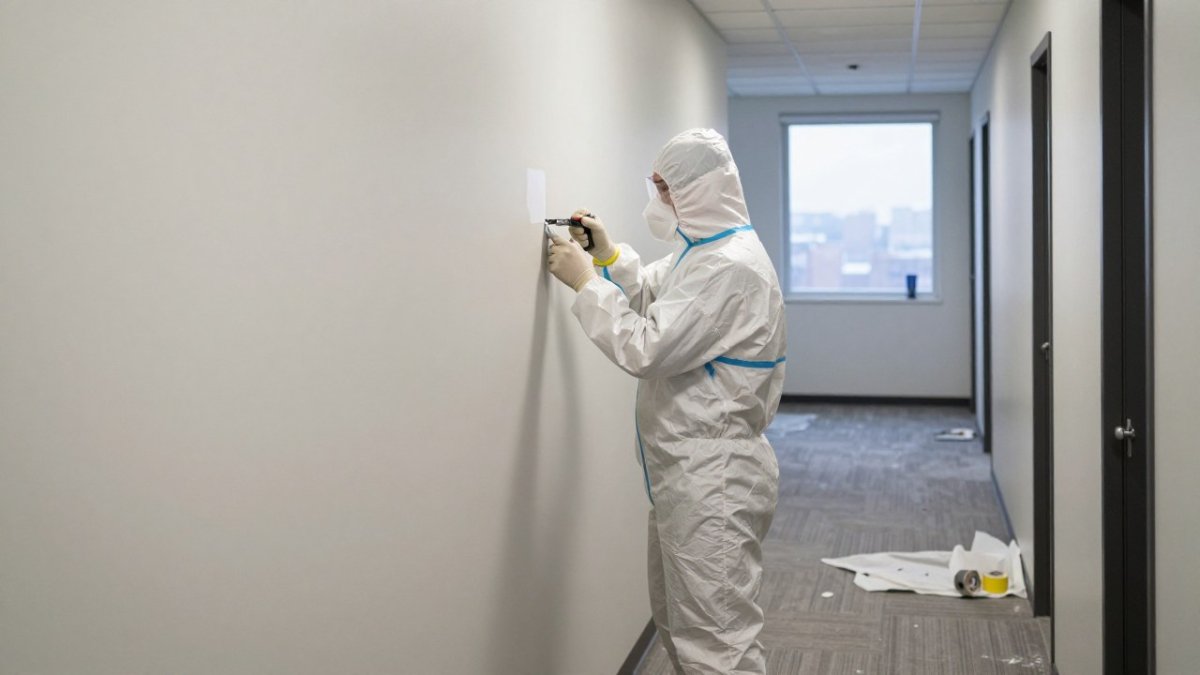
Before work starts, agree on the following:
- Which rooms and corridors are included, and which are excluded
- Whether work happens during business hours, after hours or on weekends
- How furniture, equipment and high-traffic areas will be protected
- How dust and odor will be controlled during and after the job
If your business cannot close, ask whether the crew can paint in phases. Phased work keeps rooms usable while the rest of the space is painted. Our commercial interior painting in Barrington service covers scope and scheduling in more detail.
For guidance on planning around operations, see our full guide on commercial painting during business hours.
Commercial Painting Cost per Square Foot and What Drives It
Commercial painting pricing depends on the specific building and scope of work. The useful move is to understand the cost structure so you can compare bids on equal terms. The variables below often affect the total more than any single base figure.
What actually drives the bid:
- Surface condition: Sound, previously painted drywall is the cheapest surface to coat. Peeling paint, water damage, bare drywall, or masonry that needs patching adds labor before a brush touches the wall.
- Preparation scope: Patching, sanding, caulking, masking and priming are labor hours, and labor is the largest share of most commercial painting bids. A bid that excludes prep is not a cheaper bid; it is a smaller scope.
- Number of coats and coating type: A color change from dark to light, or a switch to a higher-durability coating for a kitchen, restroom or high-traffic corridor, adds material and labor. Epoxy and other specialty coatings cost more per gallon and often require specific cure conditions.
- Access and height: Two-story lobbies, stairwells, and ceilings above standard reach require lifts, scaffolding or fall-protection setup, all of which carry their own cost and scheduling time.
- Scheduling constraints: After-hours, weekend and phased work carry a labor premium because crews work in smaller windows and often at overtime or shift-differential rates. If your business cannot close, expect this line to appear.
- Building size and repetition: Large open floors with repeated room layouts price more efficiently per square foot than a warren of small offices with lots of trim and cut-in work.
- Occupancy and protection: Moving and protecting furniture, equipment and inventory, plus dust containment and odor control, is real labor that should be scoped explicitly.
How to compare bids without a published rate:
Ask each contractor to break the proposal into preparation, painting labor, materials and cleanup, and to state the measured square footage the bid is based on. When two bids differ, compare the line items before the totals. A lower total that omits primer, patching or protection is usually the more expensive job once the change orders arrive.
Because every property is different, pricing depends on the scope of each job. Request a free estimate to receive a written quote for your property.
The table below summarises the main cost drivers the article describes, so you can see which line items most affect a commercial painting bid.
| Cost driver | Effect on bid | Note |
|---|---|---|
| Surface condition | Adds labor before painting | Peeling, water damage or bare drywall adds prep |
| Preparation scope | Largest share of labor | Patching, sanding, caulking and priming |
| Coats and coating type | Adds material and labor | Color changes and specialty coatings cost more |
| Access and height | Adds equipment and setup | Lifts, scaffolding or fall protection |
| Scheduling constraints | Adds a labor premium | After-hours, weekend and phased work |
| Building size and repetition | Changes cost per square foot | Large open floors price more efficiently |
| Occupancy and protection | Adds real labor | Moving furniture, dust and odor control |
How to Get a Commercial Painting Estimate and Compare Bids
A useful estimate starts with a walkthrough. Walk the space with each contractor and point out problem areas, schedule constraints and any surfaces you want included or excluded. Our commercial painting page shows what interior and exterior work includes before you request quotes.
Once bids arrive, compare them on:
- Total price and how it breaks down
- Scope of prep work and number of coats
- Insurance and licensing documentation
- Proposed schedule and crew size
- Warranty terms and the process for handling touch-ups
Choose the bid that matches your scope and schedule, not simply the lowest number. A slightly higher bid with complete prep and clear scheduling often produces the better result.
Request Your Free Estimate and Book a Walkthrough
If you are comparing painters in Chicago and the surrounding suburbs, Always Pro Painters offers a free estimate. Bring your floor plan, your preferred schedule and any surfaces that need attention, and we will put together a written scope for your review.
To get started, request your free painting estimate.
Last Updated: November 8, 2026
Frequently Asked Questions
How much should I expect to pay for commercial painting?
Commercial painting pricing depends on square footage, surface condition, prep work, access, finish type and whether work must happen outside business hours. Because Always Pro Painters has not published standard rates in this article, the most accurate figure comes from a written estimate after an on-site review. Ask each contractor to break out prep, labor, materials and any after-hours premium so you can compare quotes on equal terms. Request a free estimate from Always Pro Painters to see how the scope applies to your property.
How long does a commercial painting project usually take?
Timeline depends on the size of the space, the amount of surface preparation needed, the number of coats and how the work fits around your operating hours. Smaller interior refreshes can often be completed in a few days, while larger multi-room or exterior projects take longer. A good contractor will give you a project schedule in the estimate that lists phases, milestones and when the space will be fully usable again.
Can commercial painting be completed outside business hours?
Yes, many commercial painting projects are scheduled evenings, weekends or overnight to avoid disrupting customers and staff. Confirm in writing whether the estimate includes after-hours labor and how access, lighting and cleanup will be handled.
What should I look for in a commercial painting contractor?
Look for proof of general liability insurance and workers' compensation, a clear written scope, a detailed surface preparation plan, references from similar commercial properties and a final walkthrough process. Ask how the contractor protects furniture, flooring and fixtures from dust and how they handle punch-list items. Comparing these factors across bids can help you choose a contractor whose work quality and communication match your needs.