
 blog
10 Signs You Need Exterior House Painting Now
Quick Summary
You need exterior house painting when you see fading or chalking, peeling, cracking, or blistering, or when caulk fails or moisture damage appears. Early signs are easy to check from the yard and often caught before costly rot or water damage develops.
- Chalking test: rub a dark cloth on siding; a pale residue means the binder is breaking down.
- Blistering often signals moisture behind the paint, so fix the water source before repainting.
- Wash a small inconspicuous area first to tell surface dirt from a failing coating.
- Do not use a pressure washer on peeling, cracked, or blistered paint.
- Soft or spongy wood needs a professional inspection before any repaint.
Table of Contents
- Why Exterior Paint Fails and Why Early Signs Matter
- Signs 1-3: Fading, Dull Color, and Chalky Residue
- Signs 4-6: Peeling, Cracking, and Blistering Paint
- Signs 7-10: Failing Caulk, Mold, Stains, and Water Damage
- Paint Problem or Cleaning Issue? How to Tell the Difference
- How Often to Paint a House Exterior and Best Time of Year to Paint a House Exterior
- Exterior House Painting Cost and Planning Your Next Step
- Frequently Asked Questions
10 Signs You Need Exterior House Painting Now
Last Updated: November 2, 2026
Why Exterior Paint Fails and Why Early Signs Matter
Exterior paint is your home's first line of defense against sun, rain, wind, and temperature swings. Over time, that protection wears down.
Paint breaks down for a few clear reasons. UV light breaks down the pigment, moisture seeps behind the film, and freeze-thaw cycles push the coating away from the surface.
Below, we walk through 10 signs that your exterior needs attention. We also explain how to tell a paint problem from a simple cleaning issue, so you do not repaint when a wash would do.
Signs 1-3: Fading, Dull Color, and Chalky Residue
Early on, exterior paint rarely looks ruined. It just looks tired. The first three signs are easy to check from the yard.
Fading and uneven color
Sun exposure causes paint to lose its color over time. South- and west-facing walls usually fade first. If one side of the house looks noticeably lighter, or the color seems flat compared to when it was new, the topcoat is losing its protective qualities.
- Check each elevation in daylight
- Compare sun-facing walls with shaded ones
- Look for dull patches near gutters and downspouts
Uneven color is a sign the paint film is thinning. Once that happens, moisture and UV can reach the surface more easily.
Chalking: the powdery test you can do at home
Chalking is a fine, powdery residue that comes off on your hand when you rub the siding.
Chalking is common on older paint, but heavy chalking means the coating is no longer doing its job. Repainting now prevents deeper damage.
The first three signs are easy to check from the yard, and each has a quick way to confirm it.
| Sign | What to check | Meaning |
|---|---|---|
| Fading and uneven color | Compare sun-facing and shaded walls | Paint film is thinning |
| Chalking | Rub a dark cloth against the siding | Binder is breaking down |
| Dull patches | Look near gutters and downspouts | Topcoat losing protection |
Signs 4-6: Peeling, Cracking, and Blistering Paint
These three signs all point to adhesion failure, but they do not share a single cause. Peeling, cracking, and blistering each fail in a different way, and the prep work that fixes one will not fix the others. Reading the pattern correctly is what separates a repaint that lasts from one that fails again within a season.
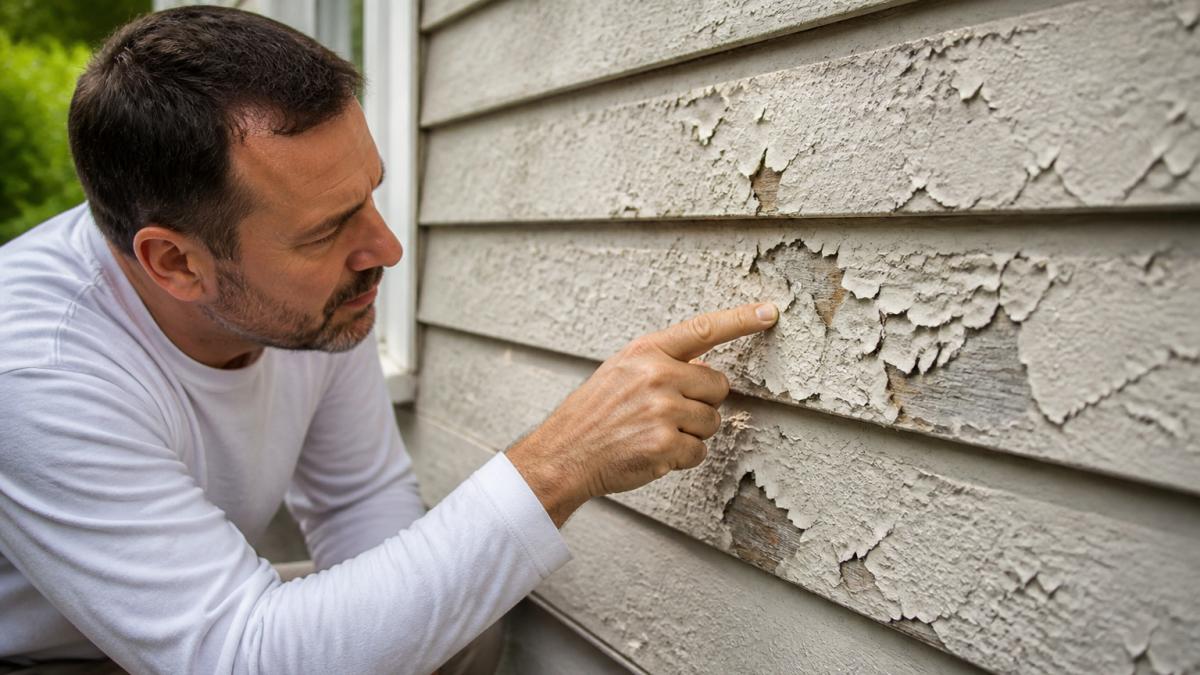
Peeling: the coating has lost its bond
Peeling shows up as strips, sheets, or flakes of paint lifting away from the substrate. On wood siding, it often starts at board ends, butt joints, and the lower courses where moisture collects.
The mechanism is straightforward: the bond between the paint film and the surface has broken. Common triggers include painting over a dirty or chalky surface, painting over bare wood without a primer, and moisture migrating through the wall from the inside.
Cracking: the film has lost its flexibility
Cracking appears as fine lines (often called checking) or as larger fissures that may run through the coating to the substrate. It is most common on older oil-based and alkyd coatings, which become brittle as they age and as plasticizers leave the film.
There is an important distinction between hairline checking and structural cracking. Hairline checking that does not reach the substrate can sometimes be addressed with a high-build primer and a flexible topcoat.
Blistering: moisture is pushing from behind
Blistering looks like raised bubbles or dome-shaped pockets in the paint film. Press one gently: if it feels soft, hollow, or spongy, water is almost certainly trapped behind the coating.
This is the sign that most often gets painted over prematurely. A fresh coat over an active moisture source will blister again, usually within one wet season. Before any repainting, the source needs to be found: a failed caulk joint, a loose flashing, a clogged gutter, or a wall assembly that is trapping vapor.
What each sign demands before repainting
The prep sequence differs by symptom:
- Peeling: Remove all loose and marginally bonded paint with a scraper, then sand the edges smooth. Spot-prime bare areas with a primer matched to the substrate, then apply the topcoat. On large failed areas, a bonding primer may be needed.
- Cracking: Open and clean penetrating cracks, then prime and fill as appropriate for the substrate. Hairline checking may only need a flexible primer and topcoat, but confirm the cracks do not reach the substrate.
- Blistering: Find and correct the moisture source first. Remove blistered paint, allow the substrate to dry, prime, and then repaint. Painting over an active leak is a temporary fix at best.
If you are unsure which pattern you are looking at, a professional inspection can distinguish surface-prep failure from moisture intrusion before you commit to a repaint.
Signs 7-10: Failing Caulk, Mold, Stains, and Water Damage
The last four signs often show up together, and they can signal a moisture problem that needs more than a fresh coat of paint.
- Failing caulk: Gaps or cracks around windows, doors, and trim let water in. Cracked or shrunken caulk is an easy repair, but it should be fixed before you repaint.
- Mold or mildew: Dark spots or fuzzy growth, especially on shaded or north-facing walls, point to trapped moisture. Algae shows up as green or black streaks.
- Stains and discoloration: Brown streaks under windows or rust drips from fasteners can mean water is moving through the wall.
If you see signs of water damage or rot, have it checked before painting. Paint applied over moisture problems will fail again quickly.
Paint Problem or Cleaning Issue? How to Tell the Difference
The more useful question is whether what you are seeing is surface soil, a localized repair, or a failing coating, because each one calls for a different response and a different budget. The checks below are organized by exterior material and by urgency, so you can decide whether to wash, repair, or plan a repaint.
Start with a low-risk wash test
Pick an inconspicuous area, ideally on a shaded elevation, and wash a small section with a soft brush, mild detergent, and a garden hose. Let it dry completely, then look again.
- If the color returns and the surface feels firm, the issue was surface soil, pollen, or mildew, and cleaning was enough.
- If a pale residue still rubs off on a dark cloth after washing, the binder is breaking down (chalking) and the coating is failing.
- If the paint is still lifting, cracking, or bubbling after it dries, the problem is the film itself, not the dirt on top of it.
Watch out: do not use a pressure washer on peeling, cracked, or blistered paint to "see what happens." High pressure can drive water behind the film and turn a localized repair into a larger one.
Material-specific signs to check
Every exterior is not the same, and the same symptom means different things on different substrates.
- Wood siding and trim: Look for peeling at board ends and butt joints, soft or spongy spots that dent under finger pressure, and dark staining that follows the grain. Soft wood is a repair issue, not a paint issue, and it needs to be addressed before repainting.
- Fiber cement: Check for hairline cracking at joints and around fasteners, and for paint that has lost adhesion in sheets. Fiber cement holds paint well when it is properly primed, so widespread peeling often points to a prep or primer failure on the original job.
- Stucco: Look for hairline cracks that follow a pattern, efflorescence (a white, powdery bloom), and paint that has blistered or separated in patches. Stucco traps and releases moisture, so blistering here often signals a drainage or flashing issue rather than a paint defect.
Separate cosmetic signs from moisture-related signs
Not every warning sign carries the same urgency. A useful triage:
- Cosmetic or low urgency: Uniform fading, light chalking, and dull color on a sound surface. These can usually wait for a planned repaint and are addressed with cleaning and a fresh topcoat.
- Repair-first: Cracked or shrunken caulk, localized peeling at joints, and hairline cracking that does not reach the substrate. These are fixable, but the repair should happen before painting.
- Prompt inspection: Soft or spongy wood, blistering near windows or the base of walls, musty odors inside the home, and stains that reappear after cleaning. These point to moisture intrusion and warrant a professional look before any repaint is scheduled.
What to do after you identify a sign
Match the finding to the next step rather than jumping straight to a paint estimate:
- Surface soil or mildew: Clean, allow to dry, and monitor. No repaint needed if the surface is sound.
- Failed caulk: Remove the old bead, clean the joint, and apply a new exterior-grade sealant before repainting.
- Localized peeling or cracking: Scrape, sand, prime, and spot-repaint; a full repaint may not be necessary if the failure is confined.
A short walkaround with these checks in hand will tell you more about what your exterior needs than any single symptom on its own.
How Often to Paint a House Exterior and Best Time of Year to Paint a House Exterior
Most exterior paint lasts several years, but the timing depends on the climate, sun exposure, and the surface material.
The best time to paint is when temperatures stay within the range recommended by the paint manufacturer, usually mild and dry days with no rain expected for at least a day.
Painting in very cold or very humid weather can cause poor adhesion and slow curing. Plan your project for a stretch of stable, mild weather.
Exterior House Painting Cost and Planning Your Next Step
Exterior painting cost depends on the size of the home, the condition of the surfaces, the amount of prep work, and the materials chosen. Repairs such as caulking, scraping, and wood replacement add to the scope, so every project is different.
A useful next step is an in-person look at your home, where the surfaces, trim, caulk, and any moisture problems can be assessed before painting begins. You can request a free estimate from Always Pro Painters to get a clear plan for your project.
If you are comparing options, our residential exterior painting guide covers planning and budgeting in more detail. You can also review exterior painting services in McHenry if you live in that area. For a closer look at how interior and exterior work differ in cost, see our guide to interior vs exterior painting cost.
Frequently Asked Questions
How do I tell if my house needs exterior painting?
Look for fading, chalky residue, peeling, cracking, blistering, and mold or mildew on the siding and trim. Run your hand across the wall: if it leaves a powdery film on your palm, the paint is breaking down. Check north and west-facing walls first, since they take the most weather. If you find several of these signs, schedule an inspection before moisture reaches the wood underneath, where repairs cost more and take longer.
How often should a house exterior be repainted?
Repaint intervals depend on the surface, the paint quality, and your climate. Wood siding often needs attention every few years, while well-prepared fiber cement or vinyl with quality paint can last longer. Harsh sun exposure and freeze-thaw cycles shorten paint life, especially in Chicago-area winters. Use the warning signs in this guide rather than the calendar alone to decide when to act.
Can you paint over peeling exterior paint?
Not directly. Painting over peeling paint traps the failing layer and the new coat will peel as well. The loose paint must be scraped, sanded, and feathered smooth, and any bare wood should be primed before the topcoat goes on. Exposed or rotted wood needs repair first. Surface preparation is what determines whether a new coat lasts or fails within a season.
What is a realistic exterior house painting cost?
Exterior house painting cost depends on square footage, surface condition, the amount of prep and repair needed, the number of stories, and the paint specified. Heavily damaged surfaces take longer to prepare and cost more. Always Pro Painters does not publish fixed prices in this article. For current pricing tailored to your home, request a free estimate from Always Pro Painters.
Always Pro Painters provides detailed surface preparation, clean lines, and a final walkthrough to make sure every detail meets your expectations. If your home shows any of these signs, reach out for a free estimate and a clear plan for your exterior.