
 How-to
How to Coordinate Wall Colors With Hardwood Floors
Table of Contents
- Start With the Undertone of Your Hardwood Floors
- Paint Colors for Warm Wood Floors
- Paint Colors That Go With Light Wood Floors
- Wall Colors for Dark Hardwood Floors
- Floor and Wall Color Combinations for the Living Room
- Testing Colors in Your Own Light, Sheen and Trim Setup
- Booking Your Color Consultation and Interior Prep Work
- Frequently Asked Questions
Start With the Undertone of Your Hardwood Floors
Most wall color mistakes start with the floor. A paint color that looks warm and inviting on a white sample card can turn orange or muddy once it meets a red-toned oak floor. Matching undertones is the fastest way to make your walls and floors look like they belong together.
Every hardwood floor carries an undertone, even when the stain looks neutral. Warm undertones show yellow, orange, or red. Cool undertones show gray, green, or ash. Once you know which one your floor has, most paint decisions get much easier.
Start by looking at the floor in natural daylight, away from direct sunlight. Then compare it to a plain white sheet of paper. The gap between the floor and the paper shows the undertone. A warm floor looks golden or reddish next to white. A cool floor looks grayer or greener.
Watch out: Do not judge the floor under warm bulbs at night. Incandescent and warm LED light adds yellow to everything, which hides the true undertone.
A Repeatable Method to Identify Undertones
Use this simple test to check a floor:
- Tape a plain white sheet of paper flat on the floor in a room with natural light.
- Look at the paper and the floor from standing height, not from above.
- Note whether the floor looks warm (yellow, orange, red) or cool (gray, green, ash) next to the white.
- Repeat the check in the morning and the late afternoon, since light shifts the color.
- Write down the result before you shop for paint.
If you still can't decide, bring a floor sample or a photo to the paint store. Store lighting is not your home lighting, so always test at home before you commit.
Paint Colors for Warm Wood Floors
Warm floors look best with walls that share some of their warmth or that stay neutral enough to let the wood stand out. Pure cool grays often clash with orange or red tones and make the floor look yellow. Instead, look at creams, warm whites, soft taupes, and greige.
Good paint choices for warm wood include:
- Warm white or cream: Keeps the room bright without fighting the floor's color.
- Soft beige or taupe: Adds depth while matching the wood's warmth.
- Muted sage or olive green: Brings in contrast while still feeling earthy.
- Deep warm brown: Works well in dens or dining rooms for a cozy feel.
A common mistake is choosing a bright white with a blue base. Blue-based whites make warm oak look dingy or yellow. Look for whites labeled warm or with a yellow or cream base.
Watch the sheen too. Matte and eggshell finishes soften warm tones, while high-gloss paint can make orange wood look harsh. Test two or three samples on the actual wall before you buy a gallon.
The article's guidance on warm wood floors comes down to a few main points:
| Paint choice | Best for | Key difference |
|---|---|---|
| Warm white or cream | Keeping rooms bright | Does not fight the floor's color |
| Soft beige or taupe | Adding depth | Matches the wood's warmth |
| Muted sage or olive green | Earthy contrast | Brings in contrast while staying earthy |
| Deep warm brown | Dens or dining rooms | Creates a cozy feel |
| Blue-based white | Avoid with warm oak | Makes oak look dingy or yellow |
Paint Colors That Go With Light Wood Floors
Light hardwood, such as maple, ash, or bleached oak, reflects a lot of light. That gives you more freedom, but it also means small color differences show up fast. A wall that is only slightly off can look like a mismatch.
For light floors, these palettes work well:
- Off-white or soft cream: Keeps the room feeling open and airy.
- Light gray with a warm base: Adds some contrast without looking cold.
- Pale blue or soft green: Brings in color while keeping the room calm.
- Warm greige: Gives you a neutral that blends with both the floor and the trim.
Light floors also make a room look bigger, so you can use a slightly deeper wall color if the room is small. Just keep the value (lightness or darkness) of the wall in a range close to the floor, or the room may feel split in two.
Wall Colors for Dark Hardwood Floors
Dark floors, such as espresso or walnut stains, absorb light instead of bouncing it back into the room. That single fact drives every wall-color decision. A wall that reads as a soft gray against light oak can read as a near-black shadow against espresso, because there is less reflected light lifting it.
Start by judging the floor's undertone before you judge its darkness. A dark floor can still be warm (red or orange undertones in mahogany or cherry stains) or cool (gray or ashy undertones in weathered walnut or driftwood stains).
Try these approaches, matched to the floor's undertone:
- Crisp white or cool white: Gives strong contrast and a clean look with cool dark floors. With warm dark floors, choose a warm white instead so the wood does not turn orange by comparison.
- Light warm gray: Softens the contrast and feels modern. Keep the gray light enough that it still reflects some light; a mid-gray next to espresso can close the room in.
- Soft blue-gray: Pairs well with cool dark wood and feels calm. Avoid blue-grays with a strong green cast next to red-toned dark floors.
- Deep color on one accent wall only: A navy or forest green wall works if the rest of the room stays light. Keep the accent wall on the wall that receives the most natural light so the color does not go black at night.
- Cream or warm off-white: The safest choice for warm dark floors in rooms with limited daylight, because it lifts the room without fighting the wood.
Light direction matters as much as paint choice. A north-facing room gets cool, indirect daylight most of the day, which pushes both the floor and the walls toward blue-gray. In that room, a warm white wall balances the cool light and keeps the dark floor from looking flat.
Bulb temperature changes the result too. Warm LED bulbs in the 2700K to 3000K range add yellow to everything, which can make a cool gray wall look beige and a warm dark floor look redder. Cooler bulbs in the 3500K to 4000K range flatten warm tones and can make a warm floor look gray.
Focus on a wall color that keeps the room bright enough to feel welcoming, especially if the room gets little natural light.
Floor and Wall Color Combinations for the Living Room
The living room is where you see the floor and walls together the most, so it is worth planning the full palette rather than picking a wall color in isolation. Keep the palette to three main colors: the floor, the main wall color, and one accent. Use the trim and ceiling as a fourth, usually white or off-white.
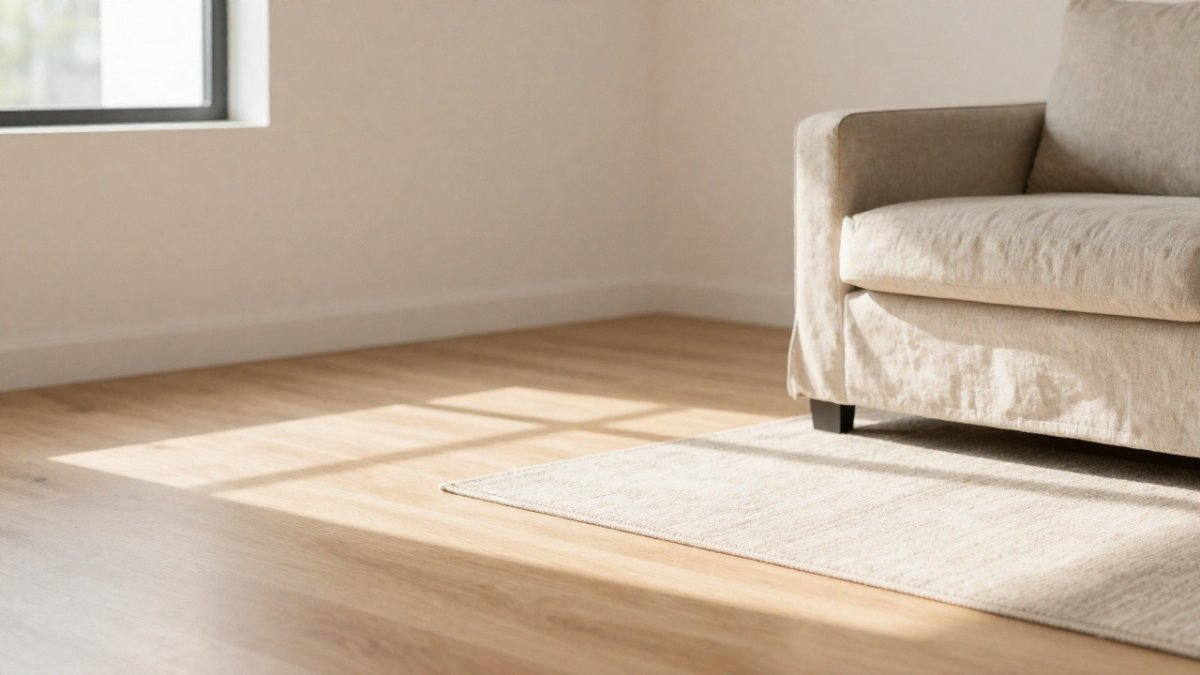
Here are three combinations that work across many homes, with the mechanism behind each:
- Light oak floor, warm white walls, soft gray sofa: Calm, bright, and easy to live with. The warm white picks up the oak's yellow undertone, and the gray sofa adds contrast without competing with the floor.
- Medium walnut floor, greige walls, cream rug: Warm and layered, good for cozy spaces. Greige bridges the walnut's brown and the cream rug's warmth, so the floor does not look red by comparison.
- Dark espresso floor, cool white walls, sage accent wall: Modern and balanced. The cool white reflects light back into the room, and the sage accent adds color without darkening the space further.
Bring in furniture and textiles before you finalize the paint. Drapes, area rugs, lamps, and upholstery change how a color reads. A cool gray wall may look very different next to a warm rug and a brass lamp.
Coordinate the trim, ceiling, and doors with the wall color rather than treating them as an afterthought. Warm white trim softens a cool wall; crisp white trim sharpens a warm one.
Look at adjacent rooms too. In an open-plan space, the living room floor often runs into a kitchen or hallway with a different finish. Pick a wall color that works with both floors, or use a consistent trim and ceiling white across the boundary so the eye has one continuous element to follow.
Watch out: Do not paint every wall a different color. Too many shifts in one room make the floor and walls compete. Keep the palette tight and use one accent at most, and repeat that accent somewhere in the adjoining room so the transition feels intentional rather than abrupt.
Testing Colors in Your Own Light, Sheen and Trim Setup
Paint samples are only useful if you test them in your home. Light changes color, and so does the sheen you choose.
Follow these steps for a reliable test:
- Paint sample swatches, at least 2 feet square, on two or three walls.
- Look at each sample in the morning, midday, and evening.
- Check each sample near the floor, since that is where the floor color affects it most.
- Compare the sample against the trim and ceiling, which are usually white.
- Note how the color looks with the lamps you use at night.
Sheen matters too. A satin or eggshell finish reflects a little light and works in most living areas. Flat paint hides wall flaws but is harder to clean. Semi-gloss suits trim and doors, where durability counts.
Coordinate the trim, ceiling, and doors with the wall color. Warm white trim can soften a cool wall, and crisp white trim can sharpen a warm one. Look at adjacent rooms too, since the eye sees them together when doors are open.
Booking Your Color Consultation and Interior Prep Work
Choosing colors is easier with a second set of eyes. Always Pro Painters can help you plan your palette and prepare the walls so the final color looks the way you expect. Our process is built around the finish, with detailed surface preparation before any paint goes on.
Good prep is what makes a color come out right. That includes patching, sanding, priming where needed, and cleaning the surfaces before the first coat.
If you are ready to get started, request a free estimate and we will walk through your floors, walls, and trim with you. You can also book a color consultation to talk through your options, or request an interior painting estimate for walls, ceilings, and trim in your home.
For a closer look at living room palettes, read 7 Best Interior Paint Colors for Small Living Rooms or see a real example in Modern Living Room Refresh. If you want a cohesive plan across floors and walls, How to Create a Monochromatic Home Color Scheme in 7 Steps is a useful next read.
Frequently Asked Questions
What wall colors complement hardwood floors well?
Walls that share the floor's undertone usually look most harmonious. Warm wood floors with red or orange undertones pair well with warm whites, cream, soft beige and muted greens. Cool-toned or gray-washed floors suit cool whites, soft gray and light blue. Testing two or three sample swatches next to the actual flooring in daylight and evening light is the fastest way to confirm the match before committing to a full room.
Should your walls be lighter or darker than your floor?
Walls are often lighter than the floor, which keeps a room feeling open and balanced. A common approach is to let the floor be the darkest large surface and the walls a lighter value. Dark floors can support mid-tone or dark walls if the room has good natural light, but very dark walls can make a small space feel closed in. The right answer depends on window size, ceiling height and how much light the room gets at different times of day.
How do you choose a wall color for warm-toned hardwood floors?
Start by identifying whether the floor has a warm, cool or neutral undertone. For warm floors, look at warm whites, creamy off-whites, soft greige and muted earthy greens. Avoid stark cool whites, which can make warm wood look orange or dull. Bring a large sample board or painted test patch into the room and check it at morning, midday and evening, since lighting changes how warm tones appear.
What paint colors work best with light wood floors?
Light oak, maple and birch floors pair well with soft whites, pale grays, light taupe and gentle sage or sky-blue tones that add contrast without overwhelming the floor. Matching the warmth of the wood helps the room feel cohesive. Sheen also matters: a satin or eggshell finish on walls is easier to keep clean in high-traffic rooms, and it reflects light in a way that brightens lighter floors.