 comparison
Is Professional Cabinet Refinishing Worth It? 7 Things to Weigh
Last Updated: October 30, 2026
Quick Summary
Professional cabinet refinishing is usually worth it when your cabinet boxes and frames are sound, because it costs less than replacement and gives a durable new look. Cabinets with swollen panels, peeling veneer or water damage typically need repair or replacement before any finish goes on.
- Compare bids on the same cabinet count and the same scope of work.
- Ask for a written prep scope covering cleaning, sanding and priming.
- Be cautious of quotes far below the others with no written scope.
- Check the door style, since raised-panel and inset doors take longer to finish.
- Inspect for warped panels, delaminating veneer and water staining before deciding.
Table of Contents
- Cabinet Refinishing vs Replacing Cabinets: Which Costs More Over Time
- How Much Professional Cabinet Refinishing Costs in the US
- How Cabinet Condition Decides Whether Refinishing Makes Sense
- DIY vs Professional Cabinet Painting: Where the Real Differences Are
- How Long Cabinet Refinishing Takes and How Long the Result Lasts
- Booking Your Free Estimate for Cabinet Refinishing
- Frequently Asked Questions
Is professional cabinet refinishing worth it? At Always Pro Painters, we hear that question most often from homeowners who are tired of dated kitchen cabinets but not ready to spend on a full replacement. Refinishing promises a new look on the existing boxes and doors, yet the price tag and the disruption still give people pause.
Most homeowners weigh three things at once: how the kitchen will look afterward, how much the project will cost, and how long the result will hold up under daily use. Each of those depends heavily on the condition of the cabinets you already have.
Refinishing is not a universal fix. Sound, solid cabinets with good frames can take a fresh, durable finish. Cabinets with swollen panels, peeling veneer or water damage usually need repair or replacement first. Knowing which group your kitchen falls into is the starting point for any honest answer.
The sections below compare refinishing against replacement, break down typical cost factors, explain how condition drives the decision, and set out what a professional finish involves compared with a DIY attempt.
Cabinet Refinishing vs Replacing Cabinets: Which Costs More Over Time
Refinishing generally costs less up front than new cabinets, but the long-term math depends on what you would otherwise replace. Replacement adds new boxes, doors and installation labor. To make the comparison honest, put both options on the same footing: the same cabinet count, the same door style, and the same finish quality.
A useful way to frame it is cost per door and drawer front. Professional refinishing and replacement are quoted differently, so pricing depends on your specific cabinets and scope. That difference in how contractors quote is why the two bids can look closer than they really are until you read the scope.
When comparing a sound set of cabinets against replacement, the options generally break down as follows:
- Professional refinishing: Cleaning, sanding, repairs, priming, finish coats, and labor to remove and reinstall doors and hardware are involved. The existing boxes stay in place.
- Refacing: New doors and drawer fronts plus a veneer or laminate skin on the visible box faces. It costs more than refinishing because you are buying new doors, but less than replacement because the boxes and layout stay.
- Full replacement: New boxes, new doors, installation labor, and often new countertops, backsplash, and plumbing or electrical adjustments. This is the highest line item and the one most likely to balloon with custom sizes, inset doors, or a layout change.
- DIY painting: Lowest cash outlay, but you supply the labor, sprayer or brushes, primer, topcoat, and the time. The trade-off is finish durability and the risk of rework.
Over time, the comparison shifts if the existing cabinets are failing. The fair comparison is refinishing a sound set against replacing that same set. If the boxes are swollen, the layout is wrong, or the door style cannot be updated without new doors, replacement or refacing may be the better long-term spend.
One more factor to consider: replacement can trigger related spending beyond the cabinets themselves, which is easy to miss when you compare only the cabinet line items.
How Much Professional Cabinet Refinishing Costs in the US
Most homeowners want a number before they call anyone. Pricing depends on factors such as cabinet count, door style, finish choice, and how much prep the surfaces need. For current pricing, request a quote from Always Pro Painters.
The variables that can affect price include:
-
Cabinet count: More doors and drawer fronts mean more labor and more finish material. A small galley kitchen and a large open kitchen can differ by thousands of dollars.
-
Door style and profile: Flat slab doors are faster to prep and finish than raised-panel or inset doors with recesses that need hand sanding.
-
Finish type: The topcoat or finish selected affects the scope. Ask what product is specified, not just the color.
-
Prep condition: Grease buildup, peeling veneer, water stains, and failed previous finishes add repair and sanding time. Prep is the largest hidden variable in any quote.
-
Hardware and layout: New hardware, added soft-close hinges, or filling old hinge holes all add labor.
When you compare quotes, look at what each one includes: thorough cleaning, sanding, a bonding primer, the number of finish coats, hardware handling, and final cleanup. A lower bid that skips preparation often produces a finish that chips or peels within a short time, which erases the savings.
You can request a free estimate from Always Pro Painters. Ask for the cabinet count, the product names, the number of coats, and any warranty terms in writing before you sign.
The main variables that can change a refinishing quote are summarised below.
| Cost factor | Why it matters | What to check |
|---|---|---|
| Cabinet count | More doors and drawer fronts mean more labor and material | Confirm the count in the quote |
| Door style | Raised-panel and inset doors need hand sanding | Note the door profile |
| Finish type | Changes the scope of the job | Ask for the product name |
| Prep condition | Grease, peeling veneer and failed finishes add time | Request a written prep scope |
| Hardware and layout | New hardware and soft-close hinges add labor | List hardware changes |
How Cabinet Condition Decides Whether Refinishing Makes Sense
Start by inspecting the doors, drawer fronts and frames. Refinishing works best when the wood is stable, the veneer is bonded and the joints are tight.
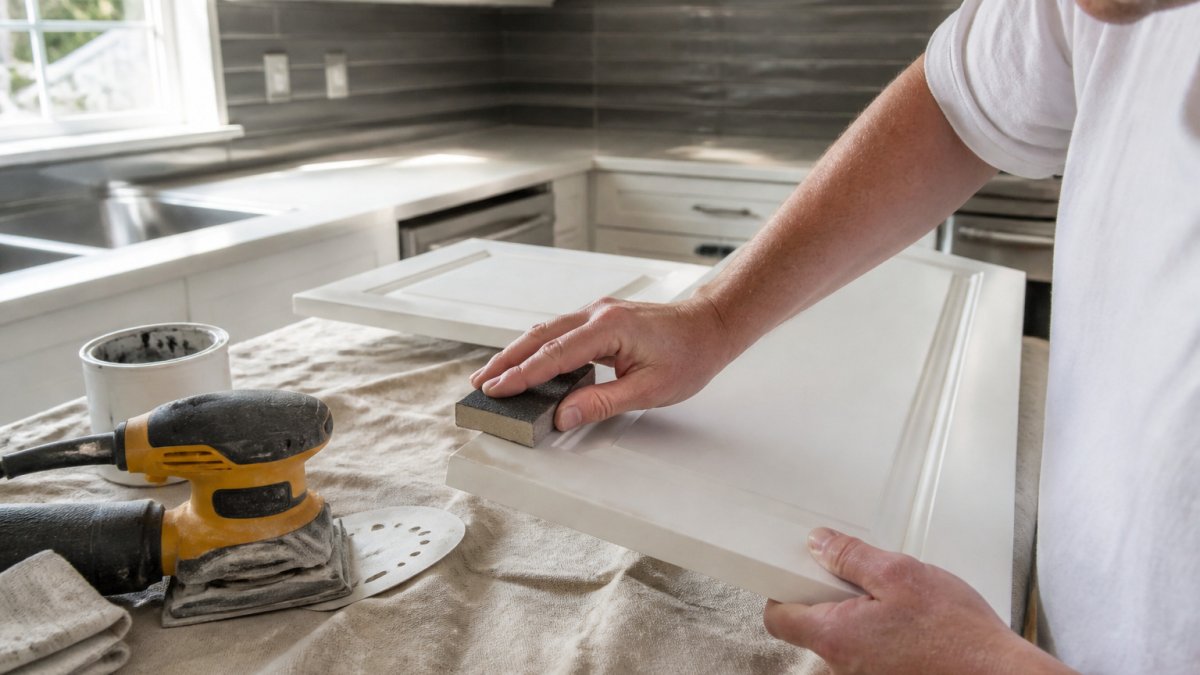
Watch for signs that refinishing will not hold: swollen or warped panels, delaminating veneer, water staining through the wood, or loose hinges and frames. These conditions call for repair or replacement before any finish goes on.
The surface you see is only part of the job. Sanding that is too light, or grease left on the surface, will shorten the life of even the best topcoat. That is why preparation takes up so much of a proper project.
DIY vs Professional Cabinet Painting: Where the Real Differences Are
Doing the work yourself can save money. The differences from professional work show up in preparation, spray equipment, environment control and the final coat quality.
A common mistake in DIY projects is skipping the degreasing step and rushing the drying times. Dust in the air, uneven coats and doors left unlevel all show once the finish cures.
Watch out: removing doors and drawer fronts without labeling them can cost hours when they go back on the wrong hinges.
How Long Cabinet Refinishing Takes and How Long the Result Lasts
Project timing depends on cabinet count, the number of coats and drying time between steps. The cabinets need time to cure before heavy use.
Durability depends on preparation, primer choice and the topcoat. A properly prepared and finished surface still needs gentle cleaning and care. Avoid harsh abrasives, and wipe spills promptly, to protect the new finish over the years.
Booking Your Free Estimate for Cabinet Refinishing
Always Pro Painters can inspect your cabinets and explain which doors and frames are suitable for refinishing. Read our Cabinet Refinishing service page to see what is included before you request an estimate.
Homeowners in the Chicago area can review our cabinet refinishing in Chicago page for local service details, and residents near the suburbs can see our cabinet refinishing in Schaumburg page.
For a deeper look at the tradeoffs, see our sprayer vs roller for kitchen cabinets guide. If you are also weighing wider exterior work, is professional exterior house painting worth it covers how durability and upkeep factor into that decision.
Frequently Asked Questions
Is professional cabinet refinishing worth the cost?
For most homes with solid cabinet boxes, yes. Refinishing usually costs well below full replacement and gives a new look in days rather than weeks. It is worth less when the cabinet frames are warped, the veneer is peeling, or the layout needs to change. A useful test is whether the boxes are sound: if they are, the money goes into a finish and new hardware rather than new structure. Get itemized quotes from at least two contractors so you can compare prep, coats, and hardware line by line.
Is it cheaper to refinish or replace kitchen cabinets?
Refinishing is almost always cheaper than replacement, because you keep the cabinet boxes and only pay for surface preparation, coatings, and labor. Replacement adds the cost of new boxes, installation, countertop adjustments, and often plumbing or electrical work. Refacing sits in between. The gap widens in larger kitchens. Ask each bidder whether their price includes doors, drawer fronts, and hardware, since those items change the comparison considerably.
How long does professional cabinet refinishing take?
Project length depends on the number of doors and drawers, the finish chosen, and drying time between coats. Ask for a written timeline that includes prep, priming, color coats, topcoat curing, and reinstallation, so you can plan around the work.
How long does refinished cabinet paint last?
A properly prepared and topcoated refinish can hold up well in a kitchen with normal use. Durability depends largely on surface preparation, the quality of the primer and topcoat, and how the cabinets are cleaned afterward. Harsh scrubbing and heat near the stove shorten the life of any finish. Ask your contractor which coating system they use and what cleaning method they recommend.