 comparison
Is Professional Exterior House Painting Worth It?
Table of Contents
- The Real Question Behind Exterior House Painting: Worth It or Not?
- DIY vs. Professional Exterior Painting: Where the Money and Risk Sit
- Professional Exterior House Painting Cost: What Drives the Number
- How Long Does Exterior House Paint Last? Repainting Cycles Compared
- Preparation, Paint Quality, and Weather: Why the Finish Holds or Fails
- Exterior Painting Contractor Questions: How to Evaluate Bids Like a Pro
- Curb Appeal and ROI: What a Fresh Exterior Actually Returns
- Conclusion: A Decision Framework for Your Home and Project
- Frequently Asked Questions
Last Updated: October 13, 2026
The Real Question Behind Exterior House Painting: Worth It or Not?
Most homeowners ask whether professional exterior house painting is worth it after pricing two options: a contractor's bid and a Saturday at the hardware store. The real answer depends on how long the finish lasts, not what it costs on day one.
At Always Pro Painters, we've walked homeowners through this exact decision, and the pattern is consistent. DIY saves money upfront and costs more over time when preparation is rushed.
DIY vs. Professional Exterior Painting: Where the Money and Risk Sit
DIY exterior painting is cheapest when the surface is already sound and the house is small and simple. The moment you add two stories, wood shingles, or peeling paint, the math flips.
What DIY Actually Saves (and What It Costs You)
What you save is labor. What you spend is time, equipment, and risk. A common mistake is budgeting for paint and rollers only, then discovering you need scrapers, sanders, caulking, primer, and a ladder tall enough for the second floor. Networx's DIY breakdown notes that small homes with flat surfaces and dry climates are the best DIY candidates, which tells you everything about where DIY stops working.
The Hidden Labor and Safety Gap on Ladders
Safety equipment and working at height are the costs homeowners underestimate most. Falls from ladders send thousands to emergency rooms yearly, and exterior work multiplies the risk. A professional crew brings ladders, harnesses, and height experience, a large part of what you're paying for.
Professional Exterior House Painting Cost: What Drives the Number
Professional exterior house painting cost depends on home size, surface area, siding material, prep work, and paint quality. HOVER's exterior painting cost guide reports that most homeowners pay between $1,800 and $8,500, with a per-square-foot range of $1.50 to $4.00 of paintable surface.
Those ranges help with budgeting, but they don't answer the real question: is the professional bid worth it versus doing the work myself? That requires comparing total cost to total cost, not labor to labor.
A Like-for-Like Total-Cost Comparison
Most DIY-versus-professional comparisons stack a contractor's all-in bid against a paint-store receipt. That's not a fair fight. A contractor's bid bundles labor, prep materials, equipment, insurance, and warranty.
Build both columns using the same scope:
| Cost Category | Professional Bid | DIY Equivalent |
|---|---|---|
| Paint and primer | Included | Retail gallons at list price; you buy the whole can |
| Prep materials | Included (scrapers, sanders, caulk, patch) | Purchased or rented |
| Equipment | Included (ladders, sprayer, harnesses) | Purchase or rental; sprayer rental runs by the day |
| Surface repairs | Itemized in scope | Your labor plus materials, or a separate handyman bill |
| Labor | Crew hours at market rate | Your hours at whatever your time is worth to you |
| Insurance and liability | Covered by contractor | Your homeowner's policy carries the risk |
| Warranty | Written, typically multi-year | None; you redo failures yourself |
| Cleanup and disposal | Included | Your time, plus disposal fees for paint waste |
The gap that surprises homeowners most is equipment. A quality airless sprayer rental, tall ladders, fall-protection gear, drop cloths, and masking supplies can add several hundred dollars before a single gallon is opened.
Putting a Number on Your Own Time
A common pattern is valuing DIY labor at the wage you'd otherwise earn. If a project takes 60 to 100 hours of scraping, sanding, caulking, priming, and two coats, that time has a real cost even without an invoice. Homeowners who enjoy the work price it near zero; those taking unpaid leave price it high. Neither is wrong, but the comparison only works if you assign a number and carry it through both columns.
Total Cost Per Year of Service
The clearest comparison is cost per year of service: divide each option's all-in cost by the expected years before the next repaint. A professional job that costs more upfront but holds nearly twice as long can land at a lower annual cost than a cheaper DIY job that fails early. Lifespan depends on preparation, paint grade, climate, and maintenance, so treat the per-year figure as a planning estimate.
| Cost Factor | What It Changes | Typical Impact |
|---|---|---|
| Home size and surface area | More paintable square footage | Higher total cost |
| Siding material | Wood shingles absorb more labor | Higher prep time |
| Surface repairs | Scraping, sanding, caulking | Adds prep hours |
| Paint quality | Premium paint covers better | Fewer coats needed |
| Coats of paint | Two coats standard | More material and labor |
| Access and height | Two stories, steep grades, tight lots | Scaffolding and safety costs |
How Long Does Exterior House Paint Last? Repainting Cycles Compared
Exterior house paint typically lasts 7 to 10 years when applied by a professional, compared with 4 to 7 years for a DIY job.
That gap matters more than the upfront price. A DIY job needing repainting in five years versus a professional job holding nine means paying for the second project sooner, often at higher cost as materials and labor rise.
Preparation, Paint Quality, and Weather: Why the Finish Holds or Fails
Surface preparation is the single biggest predictor of how long an exterior paint job lasts. Scraping loose paint, sanding rough edges, caulking gaps, and priming bare wood give the topcoat something to bond to.
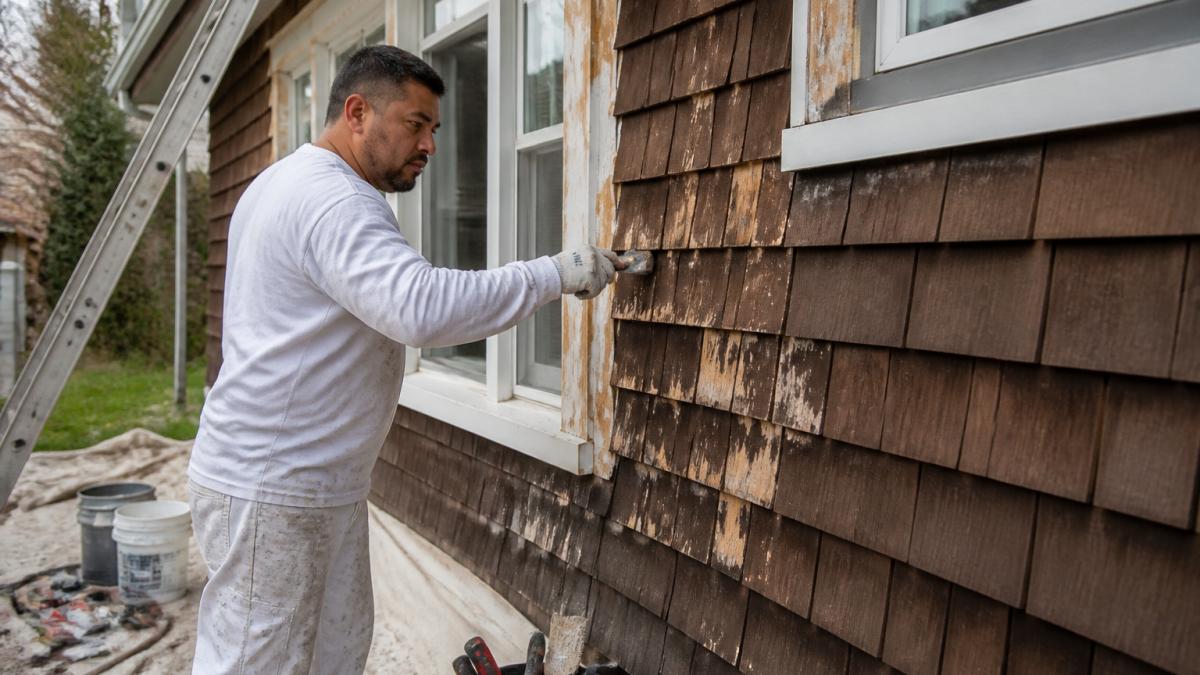
Paint quality matters, but ranks second. A premium paint over a poorly prepped surface fails faster than a mid-grade paint over a clean, primed one.
Exterior Painting Contractor Questions: How to Evaluate Bids Like a Pro
The lowest bid is rarely the best bid. Ask every contractor the same questions to compare bids on equal footing.
- Does the estimate include scraping, sanding, caulking, and priming, or just painting?
- How many coats of paint are included, and what brand and grade?
- Is surface repair (rot, cracks, loose siding) itemized separately?
- What is the project timeline, and how many days on site?
- Who handles cleanup, and is there a final walkthrough?
- Are they insured, and can they provide proof?
- What does the warranty cover, and for how long?
Bids that skip prep or quote a single coat are not cheaper; they're incomplete. Compare line items, not totals. U.S. EPA lead-safe renovation guidance is worth reviewing for homes built before 1978, since exterior work on older homes can disturb lead-based paint and requires certified contractors.
Curb Appeal and ROI: What a Fresh Exterior Actually Returns
A fresh exterior improves curb appeal and can support property value at resale. Real estate professionals commonly cite exterior painting as one of the higher-return home improvements, with some estimates placing the value impact at up to 5% of a home's price when the finish is clean and consistent.
The return depends on execution. A streaky, peeling job can hurt a sale; a clean, professionally prepped finish helps a home show well and can shorten time on market.
Conclusion: A Decision Framework for Your Home and Project
Whether professional exterior house painting is worth it comes down to five variables: siding material, home height, access, surface condition, and project size. Change any one and the math can flip. Use the framework below to place your own home.
Step 1: Score Your Siding Material
Siding drives prep time more than any other factor. Smooth surfaces like vinyl, fiber cement, and stucco clean up and coat quickly. Wood shingles, cedar clapboard, and rough-sawn siding absorb labor because every course needs individual scraping, sanding, and priming. The rougher the profile, the stronger the case for a professional crew.
Step 2: Score Your Height and Access
A single-story ranch with open lawn access is a weekend project for a confident DIYer. A two-story home, steep grade, tight lot with landscaping in the way, or roofline requiring scaffolding pushes the work into professional territory. Fall protection, ladder placement, and safe reach are skills, not accessories, and a fall is the one cost you can't recover.
Step 3: Score Your Surface Condition
Sound paint with a few chalky spots is a touch-up job. Peeling, blistering, cracking, bare wood, soft trim, or visible rot is a prep-and-repair job. The more repair needed, the more the professional bid earns its keep, because prep is where most DIY jobs fail and where most durability comes from.
Step 4: Score Your Project Size and Timeline
A small home with a simple color scheme can be a reasonable DIY project if you have the time. A large home, multiple colors, a detached garage, or a deadline tied to a listing date favors a crew that can finish in days rather than weeks.
Step 5: Match the Profile to the Recommendation
| Your Home Profile | Recommendation | Why |
|---|---|---|
| One story, sound surface, smooth siding, open access | DIY can make sense | Low prep, low risk, manageable time |
| One story, peeling paint or wood shingles | Hire a professional | Prep labor and redo risk dominate |
| Two stories, any siding, tight access | Hire a professional | Safety and equipment costs outweigh savings |
| Selling within a year | Hire a professional | Timeline reliability and curb appeal |
| Staying 10+ years | Lean professional | Longer repaint cycle lowers cost per year |
| Small touch-up on sound paint | DIY | Scope too small to justify a crew minimum |
The Bottom Line
If your home scores low on prep, height, and condition, DIY can be a defensible choice. If it scores high on any two, the professional bid usually wins on total cost per year of service, not day-one price.
The challenge with exterior painting isn't choosing a color. It's trusting that the prep work behind the finish will actually get done, because that's what determines whether the paint holds for a decade or peels in two years.
Frequently Asked Questions
How much should it cost to paint the exterior of a 1,500-square-foot house?
Professional exterior house painting cost varies by prep work, siding type, and coats needed. HOVER reports most homeowners pay $1,800-$8,500, while OpenDoor cites a national average of $3,177 and a typical range of $1,819-$4,551. For a 1,500-square-foot home, expect the lower-to-middle end if the siding is in good shape. Always get a written estimate that itemizes labor, materials, and surface preparation.
Is it cheaper to paint a house yourself or hire a professional?
DIY saves on labor cost, but Networx lists DIY materials and tools at $800-$2,500, and that does not include your time, safety equipment, or rework. Professional exterior painting costs more upfront, yet Facade Colorizer reports pro-painted exteriors last 7-10 years versus 4-7 years for DIY. Over two repainting cycles, the gap narrows considerably when you factor in prep quality and paint failure risk.
Does repainting the exterior of a house increase its value?
A fresh exterior improves curb appeal, which is one of the first things buyers notice. Industry sources often cite up to a 5% property value increase from exterior painting, though results depend on your market, home condition, and paint quality. The return on investment comes from faster sales and fewer buyer objections, not a guaranteed dollar-for-dollar return. Pair painting with repairs for the strongest impression.
What should you ask an exterior painting contractor before hiring?
Ask about surface preparation steps (scraping, sanding, caulking, priming), how many coats of paint are included, and which premium paint brand they use. Request a detailed scope of work, proof of insurance, and a project timeline. Confirm who handles surface repairs and whether a final walkthrough is included. A contractor who answers these exterior painting contractor questions clearly and in writing is worth considering.